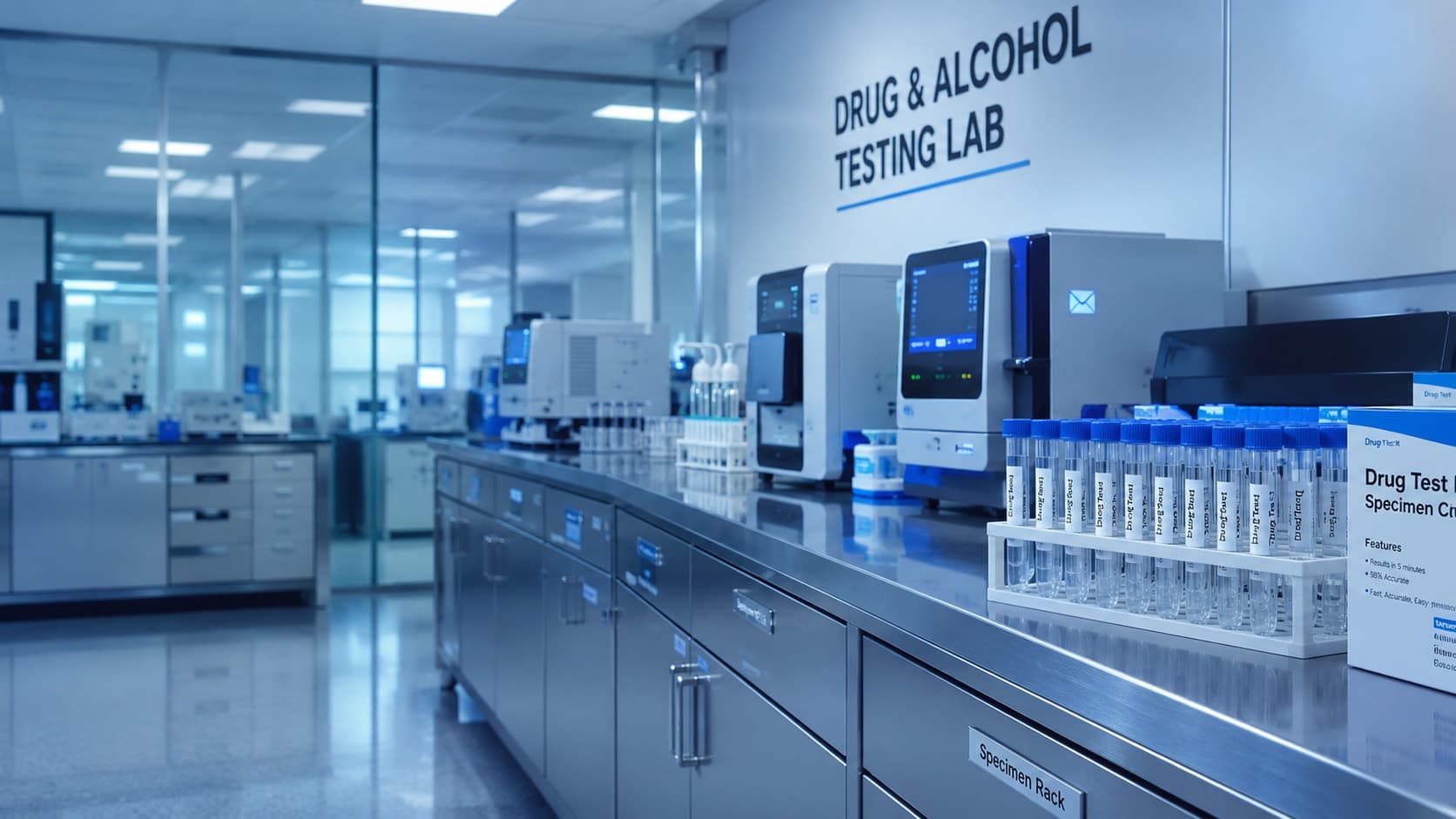
What is mobile drug testing and how does it work?
Mobile drug testing brings professional screening services directly to your workplace, job site, or designated location. Instead of requiring employees to travel to a lab or clinic, certified collectors arrive with all necessary equipment to conduct DOT and non-DOT drug tests on-site.
The process typically includes specimen collection (urine, saliva, or hair), proper labeling and chain-of-custody documentation, and secure transportation to certified laboratories for analysis. Results are delivered through a secure online portal within 24-72 hours for most standard panels. This approach minimizes disruption to business operations while maintaining full compliance with federal and state testing regulations. Mobile services accommodate various testing scenarios including pre-employment, random, post-accident, reasonable suspicion, and return-to-duty screenings.

Why do businesses choose mobile drug testing over traditional lab visits?
Businesses select mobile drug testing primarily for convenience, cost-effectiveness, and operational efficiency. When testing occurs on-site, employees avoid travel time and transportation costs, which significantly reduces productivity losses. For companies with multiple employees requiring simultaneous testing, mobile services can process dozens of individuals in a single visit.
Additionally, mobile testing reduces the risk of sample tampering or substitution since the controlled environment minimizes opportunities for cheating. This is particularly valuable for post-accident and reasonable suspicion scenarios where immediate testing is critical. Construction sites, manufacturing facilities, and remote locations benefit especially from mobile services since accessing traditional clinics may be logistically challenging. Patriot Safety & Services provides flexible scheduling that accommodates shift work, weekend operations, and urgent testing needs.
Is mobile drug testing as accurate as laboratory testing?
Yes, mobile drug testing delivers the same accuracy as traditional laboratory visits because the specimens collected on-site are processed at the same SAMHSA-certified laboratories. The collection process follows identical protocols whether conducted at a fixed clinic or mobile location—only the collection site changes, not the testing methodology or laboratory analysis.
All mobile collectors are trained and certified in proper specimen handling, chain-of-custody procedures, and DOT compliance requirements. Samples are secured, sealed, and transported under strict protocols to prevent contamination or tampering. The Department of Health and Human Services sets rigorous standards for workplace drug testing, and mobile services must meet these identical requirements. Initial immunoassay screening and confirmatory GC-MS or LC-MS testing occur in accredited facilities regardless of collection location.
What types of drug tests can be performed through mobile services?
Mobile drug testing services accommodate virtually all standard testing panels and specimen types. Common options include 5-panel, 10-panel, and DOT-mandated tests that screen for marijuana, cocaine, amphetamines, opiates, and PCP. Expanded panels can detect additional substances including benzodiazepines, barbiturates, and synthetic drugs.
Specimen collection methods include urine (most common), oral fluid/saliva (less invasive), and hair follicle testing (detects longer usage history). Breath alcohol testing is also available for mobile screening. DOT-regulated testing strictly requires urine specimens and specific 5-panel drug testing protocols. Non-DOT employers have more flexibility in panel selection and specimen type. Mobile services also support specialized testing such as observed collections for reasonable suspicion cases and split specimen procedures for federal workplace programs.
How quickly can mobile drug testing be scheduled for my workplace?
Most mobile drug testing providers, including Patriot Safety & Services, offer same-day or next-day scheduling for urgent needs such as post-accident or reasonable suspicion testing. Standard pre-employment and random testing typically requires 24-48 hours advance notice to coordinate collector availability and ensure proper preparation.
For businesses requiring regular random testing programs, standing schedules can be established with quarterly or monthly visits. Emergency services are available for critical situations where immediate testing is legally required. Scheduling flexibility accommodates various shift patterns, including early morning, evening, and weekend appointments. The scheduling process is straightforward—businesses simply specify the number of employees, testing type, preferred date and time, and location. Mobile teams arrive with all necessary equipment and documentation.
What are the legal requirements for mobile workplace drug testing?
Workplace drug testing must comply with federal, state, and local regulations that vary based on industry and employment type. DOT-regulated industries (transportation, aviation, railroad, pipeline, and transit) must follow strict Department of Transportation guidelines including mandatory random testing rates, specific collection procedures, and approved laboratory analysis.
Non-DOT employers have more flexibility but must still adhere to state-specific laws regarding written drug testing policies, advance notice to employees, and proper consent procedures. Most states require employers to maintain written drug-free workplace policies that clearly outline testing circumstances, substances tested, and consequences of positive results. Mobile testing providers ensure all collections meet legal chain-of-custody requirements and proper documentation standards. Accurate background screenings combined with compliant drug testing create comprehensive hiring safety protocols.
How much does mobile drug testing cost compared to clinic-based testing?
Mobile drug testing costs vary based on panel type, specimen collection method, number of employees tested, and travel distance. For individual tests, mobile services may cost $10-30 more than clinic visits. However, when testing multiple employees simultaneously, the per-person cost decreases significantly and often becomes more economical than clinic-based alternatives.
Consider the hidden costs of clinic testing: employee travel time, vehicle mileage, potential overtime pay, and productivity losses. These factors typically exceed the modest premium for mobile services. Many businesses find that mobile testing actually reduces total screening costs while improving compliance and employee satisfaction. Volume discounts and corporate accounts further reduce per-test expenses. When comparing providers, evaluate total cost-per-hire including testing, background check services, and administrative time rather than focusing solely on specimen collection fees.
Can mobile drug testing accommodate remote or construction site locations?
Absolutely. Mobile drug testing excels in serving remote work sites, construction zones, oil and gas facilities, agricultural operations, and other non-traditional workplace environments. Certified collectors travel to virtually any location with basic facilities, requiring only a private area for specimen collection and hand-washing capabilities.
Construction sites particularly benefit from mobile services since requiring workers to leave active job sites creates safety gaps, productivity losses, and logistical complications. Mobile teams work around construction schedules, weather conditions, and site-specific safety requirements. For extremely remote locations without facilities, mobile units equipped with private collection areas and portable amenities can be deployed. This flexibility ensures compliance even in challenging environments where clinic access is impractical or impossible. Businesses maintain consistent testing standards across all work locations.
What happens if an employee tests positive on a mobile drug test?
When a mobile drug test produces a positive result, the specimen undergoes confirmatory testing at the laboratory using more sophisticated analytical methods (GC-MS or LC-MS/MS). Initial positive screens are never reported as final results—confirmation is mandatory to eliminate false positives from cross-reactive substances.
Confirmed positive results are reviewed by a Medical Review Officer (MRO), a licensed physician trained in drug testing interpretation. The MRO contacts the employee to discuss potential legitimate medical explanations such as prescription medications. If no valid explanation exists, the MRO reports a verified positive to the employer. Employers then follow their written drug-free workplace policy, which may include disciplinary action, referral to substance abuse programs, or termination depending on circumstances and company policy. For DOT-regulated employees, positive tests trigger mandatory removal from safety-sensitive duties and require completion of return-to-duty protocols.
How does mobile drug testing maintain specimen security and chain of custody?
Chain of custody is the documented process proving a specimen’s integrity from collection through laboratory analysis and result reporting. Mobile collectors follow the same rigorous protocols as fixed-site clinics, beginning with positive identification of the donor using government-issued photo ID.
The collection process involves witnessed specimen provision (when required), immediate temperature verification, specimen sealing in the donor’s presence, and completion of federal custody-and-control forms. Each person handling the specimen signs and dates documentation, creating an unbroken chain. Specimens are stored in secure, tamper-evident containers and transported to laboratories using approved couriers. This meticulous process ensures specimens cannot be substituted, contaminated, or tampered with during transit. Any break in chain of custody invalidates test results, so mobile providers implement strict handling procedures. These safeguards protect both employers and employees.
What industries benefit most from mobile drug testing services?
Industries with large workforces, multiple work sites, or safety-sensitive positions gain substantial advantages from mobile drug testing. Construction, manufacturing, transportation, logistics, healthcare, and hospitality sectors frequently utilize mobile services due to operational demands and regulatory requirements.
DOT-regulated industries including trucking, aviation, and transit rely heavily on mobile testing to efficiently manage mandatory random testing programs without disrupting operations. Oil and gas, mining, and utilities appreciate mobile services for remote location testing. Temporary staffing agencies use mobile testing to quickly screen candidates at client sites. Even office-based businesses benefit when onboarding multiple employees simultaneously or managing comprehensive wellness programs. Any organization prioritizing workplace safety, regulatory compliance, and operational efficiency should consider mobile drug testing as a strategic advantage.
How can we get started with mobile drug testing for our business?
Getting started with mobile drug testing is straightforward and begins with evaluating your organization’s specific needs including testing frequency, employee count, location requirements, and regulatory obligations. Contact Patriot Safety & Services to discuss your workplace screening goals and receive customized recommendations.
We’ll help establish a compliant drug-free workplace policy if needed, determine appropriate testing panels, and create a convenient scheduling system. Whether you need one-time pre-employment screening or ongoing random testing programs, mobile services adapt to your operational reality. Our certified collectors arrive prepared with all necessary equipment and documentation, minimizing administrative burden on your HR team. Combined with our comprehensive background screening services, we provide complete hiring safety solutions. Reach out today to schedule your first mobile drug testing appointment and experience the convenience of on-site professional screening.


