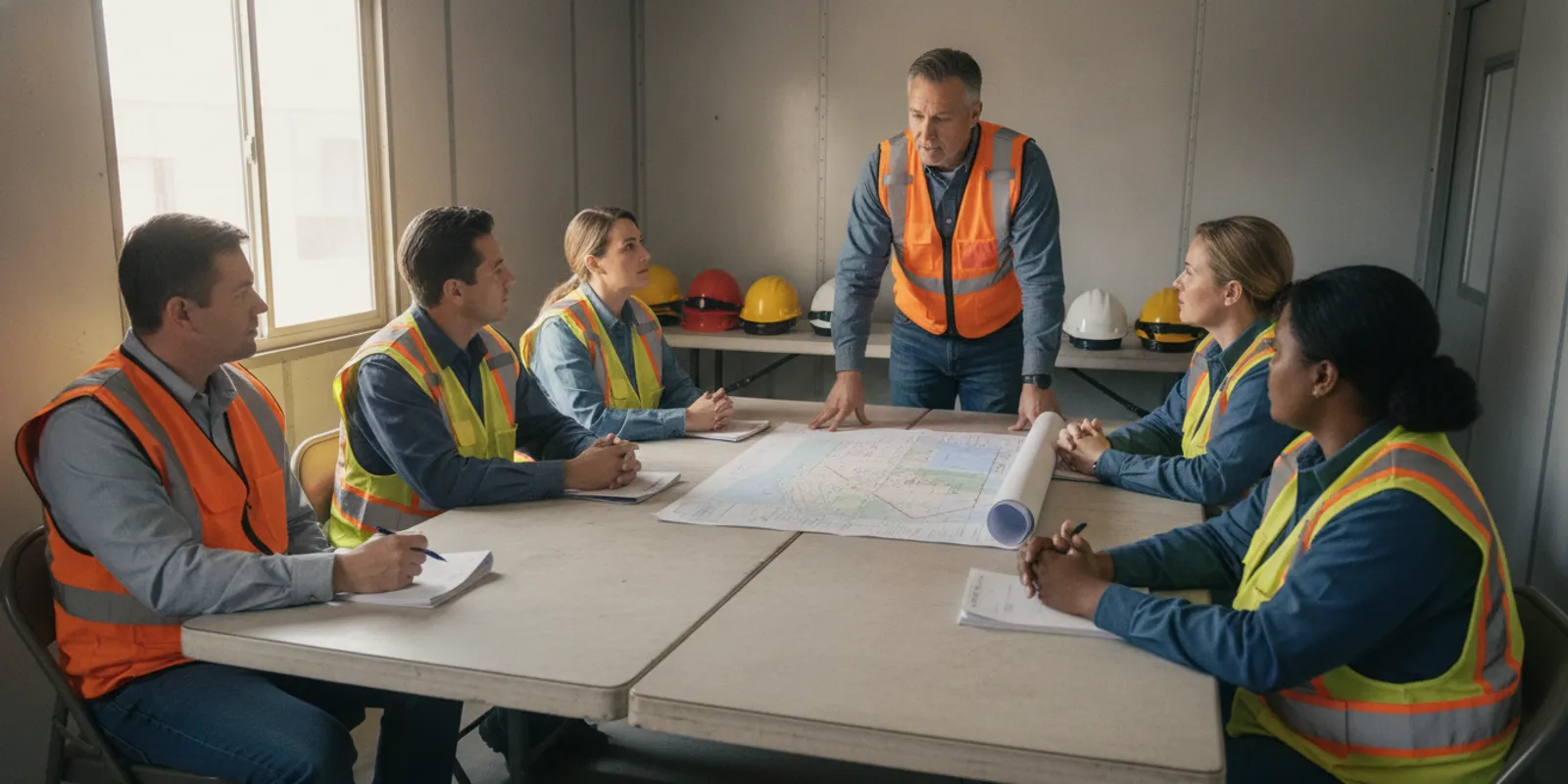
OSHA 10 hour training for employees is an entry-level safety course designed to introduce workers to common workplace hazards and prevention practices. It can give employees a useful foundation, especially in construction and general industry, but it does not replace worksite-specific instruction or an employer’s other safety responsibilities. Employers and workers should understand what the course covers, what its completion record shows, and what training must still happen on the job.
Talk with Patriot about workforce safety support
What Is OSHA 10-Hour Training?
The OSHA Outreach Training Program offers 10-hour courses for workers and 30-hour courses for supervisors and others with safety responsibilities. The 10-hour course is generally intended for entry-level workers. It introduces occupational safety and health hazards and ways to recognize and prevent them. OSHA describes the program as providing basic and more advanced training about common job hazards; the course itself is not a substitute for training required by a particular OSHA standard or for instruction tailored to a specific worksite. See OSHA’s Outreach Training Program overview for program information.
There are separate construction and general-industry courses. The right course depends on the work employees perform. A construction course focuses on hazards common to construction work, while general industry applies to many other workplaces, such as manufacturing, warehousing, and service operations. The course title alone does not tell an employer whether every training obligation for a role has been met.
OSHA Outreach courses are delivered by authorized trainers. Employers should confirm that a course is an OSHA Outreach course in the correct industry, rather than relying on a similarly named class or an informal online certificate. For requirements that arise from specific standards, OSHA’s Training Requirements in OSHA Standards explains that training obligations are tied to the applicable standards and work conditions.
Who Should Take the 10-Hour Course?
The 10-hour course is often a sensible starting point for employees who are new to an industry, new to a type of work, or seeking a structured introduction to safety basics. It may be particularly useful for construction employees, laborers, maintenance workers, and other staff who need to recognize common hazards and understand how to raise a safety concern. A course may also help employers give new hires a shared foundation before role-specific training begins.
For construction and industrial employers, the value is practical: employees who know basic hazard terminology may be better prepared to ask questions, follow procedures, and participate in pre-task discussions. A worker may, for example, learn to identify fall hazards, understand why a controlled access area matters, or recognize when a task needs further instruction before starting. The class is an introduction, not proof that a person is qualified to perform every task described.
The course is not the same thing as the OSHA 30-hour course. The 30-hour course is broader and is typically intended for supervisors or workers with safety responsibilities. Neither course should be selected merely because the number sounds appropriate. Employers should match instruction to the employee’s work, hazards, and applicable requirements. For help understanding broader workplace safety support, review Patriot’s services for employers and the industries it serves.
Whether an employee must have an OSHA 10 card before starting work can depend on the employer, project owner, contract, or state or local requirement. Do not assume that every worker in the United States is subject to one universal federal OSHA 10-hour mandate. Employers should verify the rules that apply to their location, contract, and project, and workers should ask what documentation a particular site requires.
What Topics Does OSHA 10-Hour Training Cover?
Course content varies by industry and course design, but the aim is to introduce common occupational hazards, worker rights and responsibilities, and ways to prevent injuries and illness. Students typically cover required core material along with elective subjects relevant to the course. An employer should check the current course outline with the authorized trainer instead of treating a general topic list as a guarantee that a particular hazard will be addressed in sufficient depth.
Construction courses commonly address subjects such as fall protection, struck-by and caught-in or between hazards, electrical hazards, personal protective equipment, material handling, and selected health hazards. General-industry classes may cover topics such as walking-working surfaces, machine guarding, electrical safety, hazard communication, ergonomics, and personal protective equipment. The course format and selected electives can vary, so workers should review the specific syllabus before enrolling.
These subjects are useful for recognition and awareness. They do not necessarily qualify an employee to operate equipment, enter a confined space, handle hazardous materials, perform electrical work, or use specialized protective equipment. If the job requires a demonstrated skill or a specific training credential, employers should arrange that training separately and evaluate the employee’s ability as appropriate.
Is OSHA 10-Hour Training Required?
OSHA 10-hour Outreach training is not a universal federal requirement for every employee. Some state or local rules, public projects, owners, or contracts may require an Outreach card for certain workers. Employers may also choose to require the course as part of their own safety program. Those requirements can differ, so a company should confirm the exact rule before setting a deadline or making a hiring decision.
It is important to distinguish a requirement to take an Outreach course from an employer’s obligation to provide training under an applicable safety standard. OSHA standards may require instruction for particular hazards, equipment, and job duties. An Outreach course can provide a broad foundation, but it does not automatically satisfy every hazard-specific training obligation. OSHA’s training requirements reference is a useful starting point for identifying training provisions in standards; employers should review the standards that apply to their operations.
In practical terms, employers should determine whether a specific rule or contract applies, which workers are covered, the acceptable course and documentation, and whether renewal or refresher training is required. When a project has its own site-access rules, check those before a worker arrives. For questions about workplace-specific planning, Patriot’s job hazard analysis guide offers a related framework for identifying task hazards, but it does not replace review of applicable OSHA requirements.
How Does OSHA 10 Compare With Site-Specific Orientation?
OSHA 10 and site-specific orientation solve different problems. The course introduces broad concepts. Orientation explains the actual hazards, rules, and emergency procedures employees will encounter at a particular location or during particular work. Even an employee with substantial experience may need orientation when the site, equipment, job sequence, or exposure changes.
| Training or instruction | Main purpose | What employers should verify |
|---|---|---|
| OSHA 10-hour Outreach course | Introduce common hazards and prevention concepts for construction or general industry | Course industry, authorized provider, completion documentation, and any project-specific acceptance rule |
| Site-specific orientation | Explain location hazards, access rules, emergency response, reporting, and site procedures | That content reflects the current worksite and is understood before work begins |
| Hazard- or task-specific training | Prepare employees for a defined exposure, task, tool, or required safe work practice | Applicable standard, required content, qualified instruction where required, and evidence of competence when needed |
| Refresher or change-based instruction | Address changed conditions, observed gaps, incidents, or a specific retraining trigger | Whether a standard, policy, or hazard assessment calls for refresher training and what must be documented |
For example, a new construction worker may complete OSHA 10 before joining a project. On arrival, the employer still needs to explain site access, designated walkways, emergency contacts, fall protection procedures for the assigned work, and how to report hazards. If the employee will use a particular tool or perform a specialized task, the employer must address the relevant procedures and training needs rather than infer readiness from a course card.
Employers can make orientation more useful by tying it to the work sequence. Walk the employee through the work area, point out changing hazards, explain stop-work and reporting processes, and invite questions. Use plain language the employee understands. When appropriate, ask the worker to explain the key steps back in their own words. That helps uncover confusion before a task begins.
How Should Employers Document Completion?
Keep the employee’s course completion record or card with the training file and make the information easy to retrieve for project onboarding or an audit. Record enough detail to identify the employee, course type, completion date, and provider or trainer. Follow any project or contract instructions for submitting proof. A receipt or enrollment email may show that a person registered, but it is not the same as evidence of successful course completion.
Keep Outreach course records distinct from records of site orientation and task-specific instruction. A simple training matrix can list each role, required or assigned courses, site inductions, and renewal or review dates where applicable. Include the training subject, date, trainer or provider, attendees, and any competency check when relevant. If a worker transfers into a different role or a hazard changes, update the matrix and determine whether additional instruction is needed.
Good documentation supports follow-through, but a file alone does not make training effective. Employers should verify employees understand the instruction and can apply it to their assignments. OSHA’s overview of Outreach training and course cards can help employers distinguish the Outreach program from other instruction. For broader occupational health and workforce support, see Patriot’s occupational health services.
How Can Employees Get the Most From the Course?
Employees can prepare by asking whether they need the construction or general-industry course, whether the project accepts the provider and format, and how completion must be documented. Bring questions about hazards that are common in the role. During class, connect each topic to the actual work rather than memorizing terms in isolation.
- Ask for examples. If a topic seems abstract, ask how it applies to the tasks you perform.
- Speak up about unfamiliar work. A broad introductory course does not mean you are trained for every tool, chemical, vehicle, or procedure.
- Keep proof of completion. Store the card or completion record and provide it through the employer’s approved process.
- Continue learning on site. Ask for clarification when conditions, equipment, or work instructions differ from what the course covered.
- Report concerns promptly. Follow the employer’s reporting process when you notice a hazard or do not understand a safe work procedure.
Employers can support participation by giving workers time to complete the class, checking that the course is accepted for the project, and making the next training steps clear. Employees should not be expected to use the Outreach card as a substitute for asking questions or following site procedures.
How Can Employers Add OSHA 10 to a Training Plan?
Start by mapping the work, not by collecting course cards. List common job roles, worksites, tasks, and the hazards employees may encounter. Identify which standards and project rules apply, then note the training each role needs. OSHA 10 can appear as a foundational item in that plan, but its completion should not close out requirements that call for instruction on specific hazards or procedures.
- Define the audience. Decide which roles benefit from construction or general-industry Outreach training and check whether a project requires a particular course.
- Schedule around onboarding. Give employees enough time to complete the course without treating a registration as completion. Plan for site orientation and task instruction before the employee begins affected work.
- Connect instruction to tasks. Use job hazard reviews, pre-task discussions, demonstrations, and site walkthroughs to reinforce what workers learned in class.
- Confirm understanding. Invite questions and use practical checks, such as asking an employee to identify a hazard or describe the reporting procedure. Follow up where answers show confusion.
- Review after changes. Revisit the training plan when work methods, equipment, materials, locations, or responsibilities change, and after an incident or observed knowledge gap.
For a construction crew, this could mean using OSHA 10 as an introductory course before project assignment, then providing orientation on the project’s access rules, emergency response, changing work zones, and reporting channels. A worker assigned to a particular piece of equipment would receive the appropriate equipment instruction as well. In a warehouse or manufacturing operation, an employee might take general-industry OSHA 10 and still need instruction specific to the machines, chemicals, traffic routes, and protective equipment at that facility.
Keep the plan understandable to supervisors and employees. A short role-based checklist can show what must be completed before a task, what is covered at site induction, and who maintains each record. Review it periodically with people who understand the work, because hazards and project conditions can change faster than a generic training matrix.
What Are Common Mistakes to Avoid?
- Treating the card as a universal license. OSHA 10 is an Outreach course completion credential, not a professional license or blanket qualification for hazardous tasks.
- Assuming every employee is federally required to take it. Verify whether a law, project, contract, or employer policy applies to the specific workers and location.
- Using the course in place of all other training. Identify applicable hazard-specific requirements and provide site orientation and task instruction separately.
- Choosing a course without checking acceptance. Confirm industry type, provider, format, and documentation rules before enrolling or scheduling workers.
- Ignoring changes after the class. New equipment, processes, incidents, or work locations can create training needs that an earlier introductory class did not address.
- Keeping only a list of attendees. Preserve useful details about course content, provider, dates, and separate worksite instruction.
Employers managing several locations or work groups can align training with their broader safety processes. A repeatable onboarding checklist should identify the employee’s role, applicable hazards, required instruction, site-specific orientation, and records to retain. Where relevant, Patriot’s compliance resources provide additional employer-focused guidance.
Contact Patriot to discuss workforce compliance needs
Frequently Asked Questions
Does OSHA 10-hour training expire?
There is no one answer that covers every employer or project. A particular state, contract, owner, or employer may require a recent card or refresher, even when the Outreach card itself does not have a universal federal expiration period. Check the rule that applies to the work and confirm any renewal expectations before relying on an older record.
Can OSHA 10 replace new-hire safety orientation?
No. OSHA 10 provides broad introductory instruction. Employers still need to communicate the hazards, procedures, emergency arrangements, and training requirements relevant to the job and worksite.
Should employees take construction or general-industry OSHA 10?
Choose based on the industry and work context, along with project or employer requirements. Construction and general industry courses have different focus areas. If a contract specifies a course, confirm that exact requirement with the project contact.
Does an OSHA 10 card prove an employee is qualified for a task?
No. The card documents completion of an Outreach course. It does not establish that an employee has task-specific skills or meets every training requirement for equipment, hazards, or regulated work. Employers should provide and document additional instruction as needed.
Build Training Around the Work
OSHA 10-hour training can be a useful first step for employees who need an introduction to common workplace hazards. Its greatest value comes when employers select the correct course, verify completion, and connect general lessons to site orientation and task-specific instruction. A clear training plan helps employees know what they have learned, what remains, and where to go with questions before work begins.