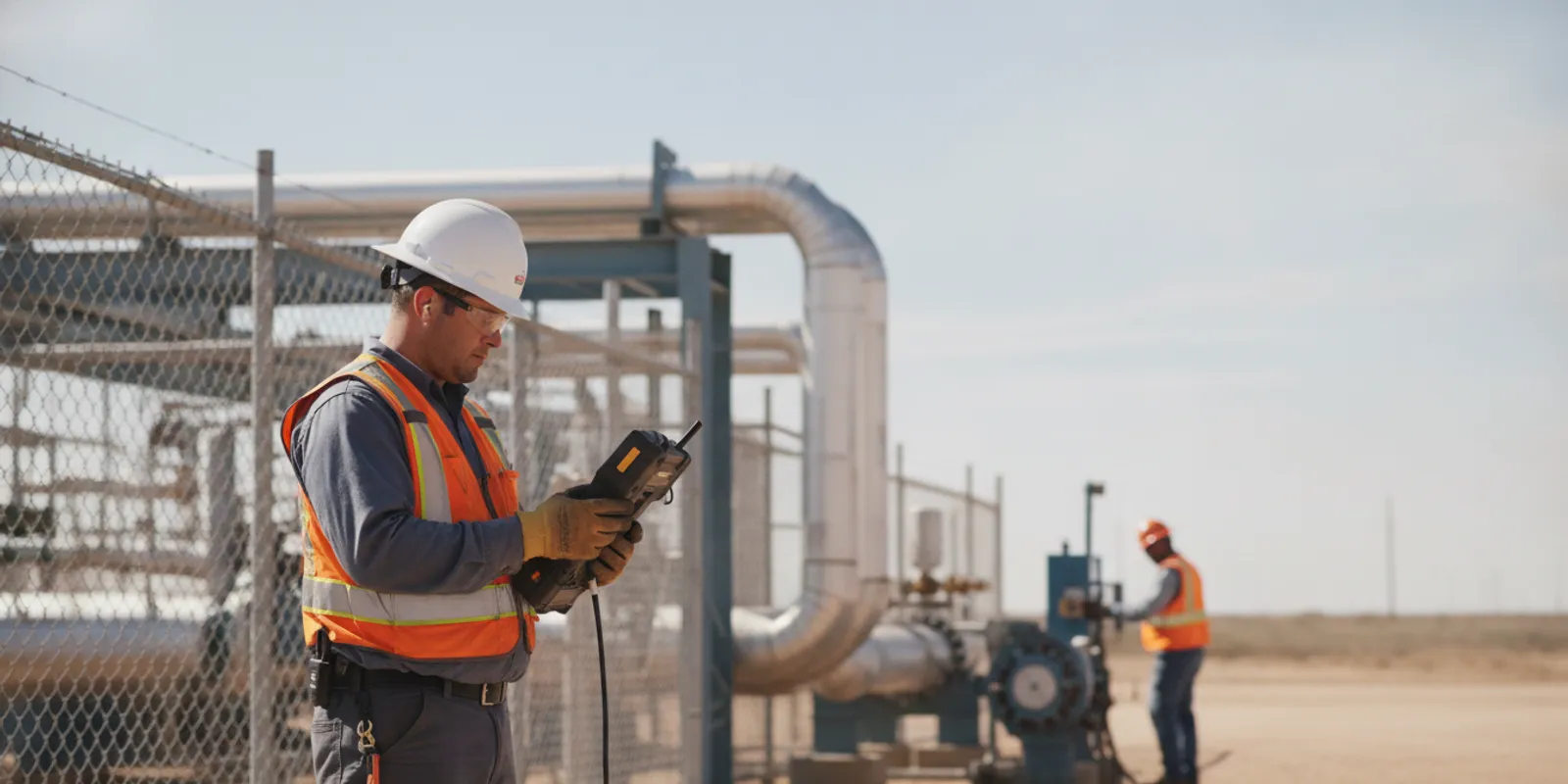
Industrial hygiene certification is a phrase employers often use when they are trying to determine who can evaluate workplace exposures and what qualifications to look for. It can refer to professional credentials held by an individual, but it is not one blanket certification that automatically covers every hazard, industry, or regulatory duty. The practical question is whether the person has the right education, experience, methods, and scope for the work your site needs.
Discuss your workforce health and compliance needs
What does industrial hygiene certification mean?
Industrial hygiene is the practice of anticipating, recognizing, evaluating, and controlling workplace conditions that may cause injury or illness. Depending on the workplace, those conditions can include airborne dusts, fumes, vapors, gases, noise, heat, biological agents, or ergonomic stressors. The work may involve a walkthrough, review of job tasks, exposure monitoring, interpretation of results, and recommendations for controls.
There is not a single government-issued credential called “industrial hygiene certification” that grants a person authority to assess every possible workplace risk. Employers may use the phrase to mean a professional credential, a course completion certificate, or evidence of specialized training. Those are not interchangeable. A course certificate can show that someone completed a defined class; it does not by itself establish broad professional competence or authorize a person to perform every exposure assessment.
One credential employers may encounter is the Certified Industrial Hygienist (CIH). It is a professional certification for qualified practitioners. The exact eligibility, examination, and maintenance requirements should be confirmed with the credentialing body because requirements can change. A credential is one useful qualification signal, but it does not replace checking whether the individual has relevant experience with your hazards, processes, sampling strategy, and applicable standards.
When researching formal workplace requirements, consult the relevant regulator directly. The Occupational Safety and Health Administration (OSHA) is a starting point for federal workplace safety and health information. Particular rules may specify duties, training, exposure limits, or documentation without requiring one named “industrial hygiene certification” for every person involved. Check the rule that applies to the specific hazard and work activity rather than relying on a general credential label.
When should an employer seek qualified industrial hygiene support?
Employers should consider qualified industrial hygiene support when workers may be exposed to a health hazard and the employer does not have the expertise or equipment to evaluate it reliably. That can happen before a new process begins, after a material or production change, in response to worker concerns, or when monitoring and records indicate that existing controls may not be adequate.
- New or changed work: A new chemical, production line, material, tool, ventilation system, or work method can change exposure conditions.
- Airborne hazards: Cutting, grinding, welding, coating, cleaning, or handling bulk materials may create dust, fumes, vapors, or gases that require evaluation.
- Noise or heat concerns: Workers may have difficulty communicating, report discomfort, or work in settings where the conditions vary by task or shift.
- Unclear controls: A respirator, enclosure, local exhaust system, or work practice may be in place, but the employer needs to understand whether it is suitable and working as intended.
- Worker reports or symptoms: Concerns should be taken seriously and assessed promptly. A professional can help identify possible exposure pathways; employers should also follow their medical and incident-response procedures.
- Regulatory or customer requests: An inspection, contract, audit, or site requirement may call for records or a competent evaluation. Confirm exactly what the request and applicable rules require.
Industrial hygiene support is not only for large plants. A small contractor may need an assessment for a particular task, while a multi-site employer may need a consistent program across facilities. The right scope depends on the hazard, workforce, processes, and decisions the employer needs to make. If you need broader workforce health support, review Patriot’s occupational health services and confirm directly which service fits your need.
What work might an industrial hygienist perform?
The activities vary by hazard. A qualified professional should explain the purpose and limits of each step before work begins. A typical assessment can include several of the following:
- Understand the work. The assessor reviews materials, safety data, processes, equipment, work schedules, tasks, and existing controls. They may observe the work and speak with employees and supervisors.
- Identify potential exposure routes. The review considers whether a hazard can be inhaled, contact skin or eyes, be ingested, or affect workers through another route. It also considers who may be exposed and under what conditions.
- Decide whether measurement is appropriate. Monitoring may involve personal samples, area measurements, direct-reading instruments, noise measurements, or another method. The method should match the question being answered.
- Interpret the findings. Results need context: task duration, production conditions, worker location, sampling method, instrument limits, and the relevant comparison criteria. A number without that context can be misleading.
- Recommend controls and follow-up. Recommendations may address process changes, ventilation, isolation, work practices, housekeeping, maintenance, or protective equipment. The employer then decides how to implement and verify controls.
For example, a single area reading near a machine may not represent a worker’s full shift or the highest-exposure task. Conversely, one short-term measurement may be appropriate when the question concerns a brief task or peak condition. The assessor should state what was sampled, when and where it was sampled, which workers or tasks it represents, and what conclusions the data can and cannot support.
How should employers evaluate credentials and competence?
Start with the work to be done, not a credential label alone. Before engaging an assessor, write down the hazard or concern, the jobs and locations involved, and the decision you need to make. Then ask prospective providers to show how their qualifications and method fit that specific scope.
- Check education and credentials. Ask what relevant education, professional credentials, and continuing professional development the lead assessor has. Verify credentials with the issuing organization where appropriate.
- Look for hazard-specific experience. Experience with a general industrial setting may not be enough for a specialized chemical, construction activity, confined work area, or unusual process. Ask for examples of similar work without requesting confidential client information.
- Ask who will do the work. Confirm the lead professional, the roles of technicians or subcontractors, and who will review and sign the report. Clarify who will answer questions after delivery.
- Review the proposed method. Ask why the proposed sampling or evaluation approach fits the task, how representative conditions will be selected, and what limitations may affect interpretation.
- Confirm equipment and quality practices. Ask how instruments are selected, maintained, calibrated, and documented, and how samples are handled and analyzed when laboratory work is needed.
- Ask for practical reporting. A useful report should describe the scope, observations, methods, results, limitations, conclusions, and recommended next steps in language the employer can act on.
Do not assume that a person holding a safety training certificate is automatically qualified to conduct an exposure assessment. Likewise, do not assume that one professional credential makes an assessor the right choice for every hazard. Verify the relevant training and experience for the exact work. An employer remains responsible for making sure workplace hazards are addressed, even when an outside specialist performs measurements or prepares recommendations.
What should an industrial hygiene assessment include?
Agree on a written scope before fieldwork. This prevents mismatched expectations, such as expecting a full-site review when the proposal covers one task, or expecting a compliance determination when the work is only an initial screening. A clear scope should identify the question, locations, tasks, people, methods, deliverables, and follow-up.
| Scope element | What to define | Why it matters |
|---|---|---|
| Objective | The decision or concern the assessment must address | Keeps the work focused on a usable outcome |
| Hazards and tasks | Materials, processes, job steps, shifts, and potentially exposed groups | Helps identify representative conditions and relevant exposure routes |
| Assessment method | Observation, sampling, instrument readings, records review, or a combination | Connects the data collection approach to the question being asked |
| Deliverables | Report format, results, limitations, recommendations, and briefing | Sets expectations for how findings will be communicated |
| Employer responsibilities | Site access, process information, safety rules, escorts, and employee coordination | Supports safe and accurate fieldwork |
| Follow-up | Control implementation, verification, additional monitoring, and review triggers | Turns observations into an ongoing prevention process |
Costs depend on the hazard, number of sites and tasks, time required, sampling and laboratory needs, travel, and report detail. Avoid comparing proposals on price alone when one includes representative personal monitoring and a documented interpretation while another offers only a brief walkthrough. Ask each provider to state exclusions and assumptions so the proposals can be compared fairly.
How do employers turn assessment results into a program?
An assessment is a point-in-time evaluation, not a substitute for a working prevention program. Conditions can change with production, equipment, materials, staffing, and maintenance. Employers should assign an owner for the findings, keep records that support decisions, and revisit the assessment when conditions or evidence warrant it.
Before a site visit, gather a current process map or task list, chemical inventory and safety data sheets, prior monitoring reports, relevant incident or concern records, and descriptions of existing controls. Do not assume that a document alone reflects actual practice. Walk through the process with the assessor and identify when tasks vary, such as startup, cleaning, maintenance, shutdown, or unusual production demands. Include contractors and temporary workers in the discussion where their activities or exposures are relevant.
Set expectations for how results will be shared. Supervisors need clear actions and ownership; affected workers need understandable information about the assessment and any changes to their work. Determine in advance how urgent findings will be communicated and who can authorize interim controls. A useful exposure assessment connects field observations and measurements to decisions, not simply a set of readings. Employers may also find it useful to review this job hazard analysis resource as they organize task-level safety information; a job hazard analysis and an industrial hygiene evaluation serve related but distinct purposes.
- Prioritize findings. Identify urgent concerns and any required response. If results indicate a potentially serious or uncontrolled exposure, take appropriate interim steps and obtain qualified help rather than waiting for a routine review.
- Select controls. Consider whether the hazard can be eliminated or reduced through substitution, process changes, enclosure, or ventilation. Administrative measures and personal protective equipment may also have a role, depending on the hazard and applicable requirements.
- Assign responsibility. Name who will arrange the change, who will verify it, and when it must be completed. Include affected supervisors and workers in implementation.
- Verify effectiveness. Decide whether observation, maintenance checks, repeat monitoring, or another method will confirm that controls work under representative conditions.
- Keep records usable. Retain the assessment, supporting data, control decisions, training or communication records, and follow-up in the manner required by applicable rules and company procedures.
- Review triggers. Reassess when there is a process or material change, a new task, a control failure, a worker concern, or other evidence that the original evaluation may no longer represent conditions.
For employers operating across multiple locations, a central process can help standardize hazard inventories and action tracking, while site-specific observations still matter. A task at one facility may differ from the same task elsewhere because of ventilation, equipment, materials, or work practices. See the industries Patriot serves for context on its workforce-focused work, and use the compliance insights and resources as a place to explore related employer topics.
What mistakes should employers avoid?
- Treating a certificate as a complete program. A credential does not identify every hazard at a site or ensure that controls are implemented.
- Ordering measurements without a question. Sampling is most useful when the employer and assessor know what decision the results will inform.
- Using unrepresentative conditions. A quiet day, unusual process setup, or limited task observation may not reflect normal or worst-case work. Document the conditions observed.
- Assuming “below a limit” means no risk. Applicable comparison values have defined purposes and limits. Interpretation should consider the relevant rule, duration, variability, and worker circumstances.
- Stopping at the report. Assign owners and due dates for controls, communication, and follow-up. Findings left in a file do not change the exposure.
- Overlooking affected workers. Employees often know how tasks actually happen. Include them in observation and communicate findings and control changes appropriately.
Employers should also distinguish industrial hygiene assessment from occupational medical evaluation. Exposure monitoring characterizes workplace conditions; medical care and decisions about an individual’s health belong with appropriate healthcare professionals. Coordinate the functions when needed, while protecting sensitive health information.
For related workforce compliance support, Patriot describes its service areas, including occupational health. If you need to confirm which services fit your situation, use the contact page to discuss the request. A clear description of your industry, location, workforce, and concern will help frame the conversation.
Talk with Patriot about your workforce health needs
Frequently asked questions
Is industrial hygiene certification required for every workplace assessment?
Not necessarily. Requirements depend on the specific hazard, applicable regulation, and work being performed. Some rules define particular qualifications or duties; others do not require one universal industrial hygiene credential. Identify the governing requirement and select a person competent for the assessment.
Does an industrial hygiene course certificate make someone a CIH?
No. A course completion certificate and a professional certification are different things. Employers should verify the credential claimed and evaluate the person’s relevant experience and methods for the work in question.
When is air sampling useful?
Air sampling can help characterize exposure when a suitable method exists and the results will inform a decision. The assessor should explain what the sample represents, how it will be collected and analyzed, and what the result cannot establish. Sampling is not always the first or only useful step.
Can an employer rely entirely on an outside industrial hygienist?
An outside professional can provide specialized evaluation and recommendations, but the employer still needs to provide accurate site information, implement appropriate controls, communicate with workers, and follow applicable obligations. Define roles and follow-up in the scope of work.
How often should an assessment be repeated?
There is no single interval that fits every hazard. Follow applicable requirements and reassess when processes, materials, controls, or evidence change. A qualified professional can recommend whether and when repeat monitoring is useful for the specific conditions.
Industrial hygiene certification is best treated as one part of a qualification review, not as a shortcut for choosing an assessor. Define the workplace question, verify hazard-specific competence, agree on a clear assessment scope, and make sure findings lead to documented action.