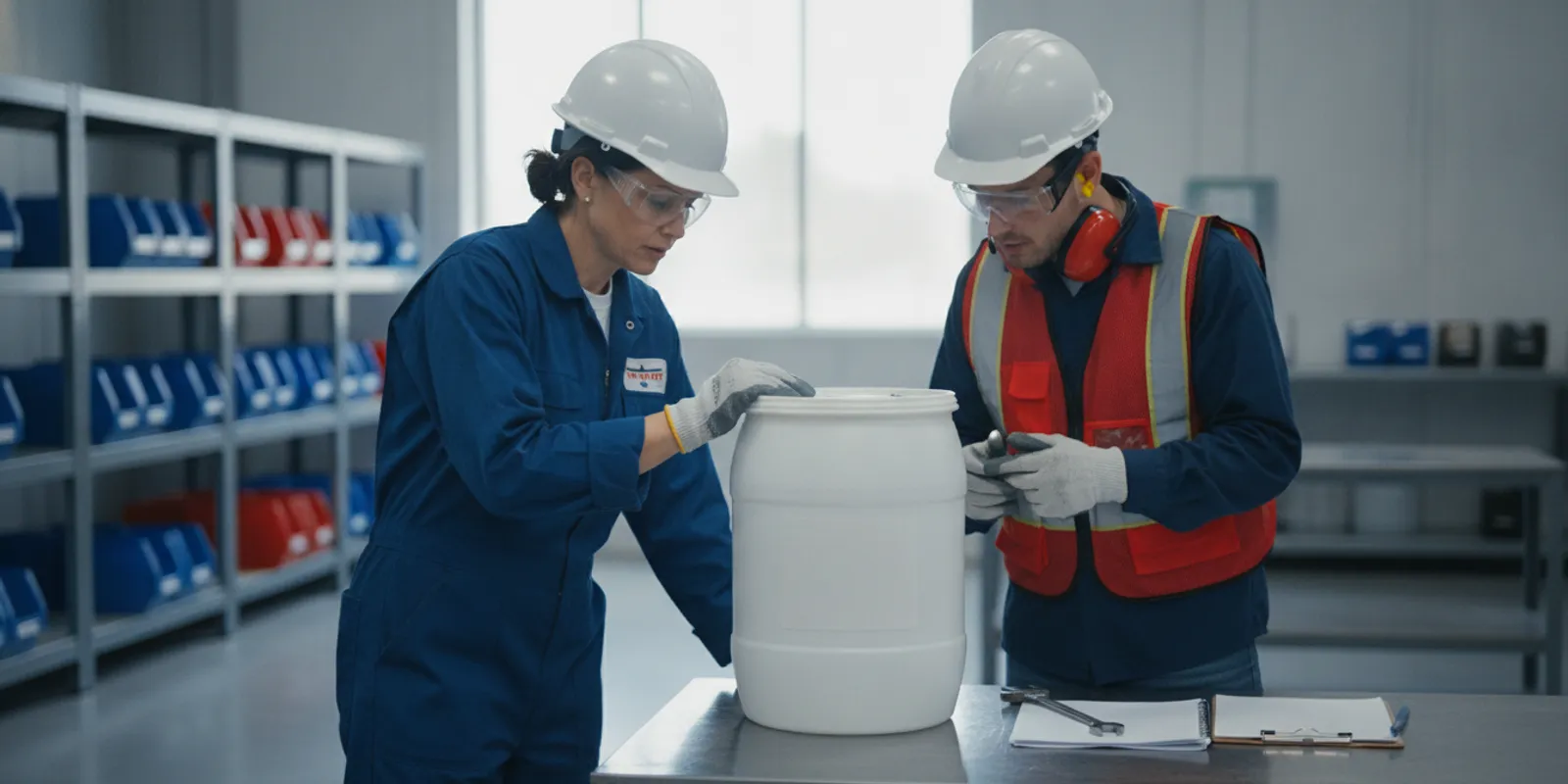
The OSHA hazard communication standard (HazCom) gives employers a framework for informing workers about hazardous chemicals in the workplace. A useful program connects a current chemical inventory to container labels, accessible safety data sheets (SDSs), employee training, and clear communication with contractors. The steps below explain how to organize those pieces without treating an SDS collection as the whole program.
Talk with Patriot about workforce compliance support
What does the OSHA hazard communication standard require?
OSHA’s Hazard Communication Standard, also called HazCom, is intended to ensure that information about chemical hazards and protective measures is communicated to employees. The general industry requirements are in 29 CFR 1910.1200; construction has a corresponding provision at 29 CFR 1926.59. Employers should identify which OSHA rules apply to their operations and check the current text rather than relying on a generic checklist.
In broad terms, a compliant program includes a written hazard communication program, labels and other warnings, safety data sheets, and employee information and training. These are connected controls. An inventory helps an employer identify what needs to be addressed; labels and SDSs communicate hazard details; training helps employees understand the information and apply it to their work.
The current text of OSHA’s Hazard Communication Standard sets out employer duties, including written-program, labeling, SDS, and training provisions. OSHA’s standard uses a system for communicating chemical hazards through labels and SDSs, as summarized in this NIH Bookshelf overview of chemical hazards and communication.
How should an employer build a written HazCom program?
A written program should describe how the employer will meet the standard at each workplace. It should be specific enough that a supervisor or employee can follow it, not just repeat regulatory language. OSHA expects the program to address the employer’s methods for implementing labeling, SDS access, and training, as well as how employees will be informed about hazards in certain work situations and how contractors will be informed about hazardous chemicals.
Start by naming who maintains the program and who is responsible for keeping each part current. Depending on the organization, those roles may include a safety lead, site supervisor, purchasing contact, or department manager. Define how new chemicals are reviewed before they arrive, who obtains the SDS, who checks the label, and how changes reach affected workers.
- Describe how hazardous chemicals are identified and how the workplace inventory is kept current.
- Explain the labeling system used for shipped containers and workplace containers.
- State how employees can access SDSs during their work shift.
- Describe when and how employees receive hazard information and training.
- Set out the method for sharing relevant information with other employers at a multi-employer worksite.
Write down a process for non-routine tasks and for hazardous chemicals in unlabeled pipes, as applicable. Employees may encounter risks that are not obvious from a normal task or familiar container. The program should explain how the employer will tell them what hazards are present and what protective steps are needed before the work begins.
Keep the program aligned with actual site practices. If employees are told to consult an SDS but cannot access it from their work area, the written procedure does not solve the gap. Review the program when operations, chemicals, locations, or responsibilities change. For a broader look at how work hazards are identified before controls are selected, see Patriot’s guide to conducting a job hazard analysis.
How can employers maintain a useful chemical inventory?
The inventory is the practical starting point for managing chemical information. It should identify hazardous chemicals known to be present in each workplace or work area, using product identifiers that can be matched to container labels and SDSs. A list of vague categories such as “cleaners” or “shop supplies” is difficult to use when a worker needs information about a particular product.
Walk the site and check the places where chemicals are received, stored, used, or temporarily staged. Include relevant work areas, maintenance supplies, laboratories, storage rooms, and mobile or remote locations when those are part of the employer’s operations. Ask supervisors and purchasing staff about products that may not appear in a central supply record. The inventory should reflect chemicals actually present, not simply a list of products once ordered.
For each entry, record the product identifier as shown on the label and identify where it is used or stored. Assign an owner to update the list when a new chemical is approved, an existing product is replaced, or a chemical is removed from the workplace. Compare the inventory against containers and SDS files on a regular schedule and after process changes.
Inventory accuracy also helps employers avoid two common mistakes: keeping an SDS for an old product while workers use a replacement, and overlooking products kept outside the main storeroom. A simple review can ask: Does this product appear in the inventory? Does its label match an available SDS? Do the people who use it know where to find the relevant hazard and protection information?
What must chemical labels tell employees?
Labels are a point-of-use warning. Under HazCom, shipped containers of hazardous chemicals must carry required information, and employers must ensure that labels on incoming containers are not removed or defaced. An employer should have a receiving check so damaged or missing labels are noticed and addressed rather than passed into routine use.
For workplace containers, the standard provides labeling options and limited exceptions. Do not assume that an unlabeled container is acceptable simply because a worker recognizes it. Check the rule that applies to the particular container and workplace situation. Where the standard permits a workplace label, it must communicate the required hazard information through words, pictures, symbols, or a combination that provides general information about the hazards. The label should be understandable to employees and consistent with the program.
Set a clear local rule for secondary containers. Employees should know whether a container is intended for immediate use by the person who transferred the chemical, when a label is needed, and what information belongs on it. Make sure labels remain legible and are not covered by residue, damaged during use, or separated from the chemical they identify.
Labels and SDSs should work together. The label alerts a worker to the hazard and points to protective information; the SDS provides more detailed information. If the product identifier on the label cannot be found in the inventory or SDS system, investigate the mismatch rather than asking employees to guess.
How should employers manage safety data sheets?
An SDS contains detailed information about a hazardous chemical, including its hazards, handling, storage, and emergency measures. Employers must maintain an SDS for each hazardous chemical they use and ensure employees can access the information. OSHA requires access during each work shift; a system that works only when a particular manager is present is not dependable.
Choose an access method that suits the workplace. A paper binder can be effective when it is kept in a known, accessible location and updated. An electronic system can also work when employees can reach it where they work, know how to search it, and have a practical alternative if a device, connection, or platform is unavailable. Tell employees how to find an SDS and confirm that they can do so.
When a new hazardous chemical arrives, check that an SDS is available and that it corresponds to the product identifier on the container. Follow up with the supplier when information is missing or appears inconsistent. Replace outdated copies when updated information is received, and remove obsolete files in a controlled way so staff are not left with conflicting versions. Make sure workers can access SDSs in an emergency and that the access method does not depend on permission from someone who may be off site.
An SDS is not a substitute for a written program, labels, or training. A folder full of documents does not show that a worker knows which product they are using, understands its warnings, or has been taught the relevant protective measures. Treat SDS management as one part of the complete system.
What should employee training cover?
Employees must receive effective information and training about hazardous chemicals in their work area at the time and under the conditions specified by the standard. Training is required at initial assignment and when a new chemical hazard that employees have not previously been trained about is introduced into their work area. Employers should check the exact rule and apply it to their circumstances.
Training should be understandable to the employees receiving it and should cover both the hazard communication system and the hazards workers may encounter. Explain how employees can detect a chemical release or presence, the physical and health hazards of chemicals in their work area, protective measures, and how to read labels and use SDSs. Include the site’s labeling method and where written program information is available.
Make the instruction relevant to the job. A worker who handles a product should be able to identify its label, locate its SDS, explain the applicable protective measures, and know whom to contact if the information is missing. A short demonstration—finding an SDS using the actual workplace system, for example—can reveal access problems that a slide presentation may not show.
Keep a record of the training date, employees or groups covered, topics, and the person who delivered it. OSHA’s requirements focus on effective communication, so a sign-in sheet alone does not establish that the content was understood. Use questions, practical demonstrations, or supervisor follow-up to identify where instruction needs clarification. Repeat or supplement training when processes, hazards, labels, or access methods change.
How should contractors and other employers share hazard information?
On a multi-employer worksite, employers need a reliable way to exchange information about hazardous chemicals and protective measures that may affect another employer’s employees. A contractor arriving for maintenance or construction may not know what chemicals are used in the area, what hazards remain, or which precautions the host employer expects. A brief orientation and a defined information contact can prevent gaps.
Before work begins, establish who will share the relevant SDSs, explain the workplace labeling system, and communicate precautions for normal operations and foreseeable emergencies. Ask contractors to share information about hazardous chemicals they bring onto the site and how their employees will be informed. Make the exchange specific to the work area and task; a general statement that “safety information is available” may not tell another employer where to find it or what hazards matter.
Include communication steps in the written program and in work planning. Identify the host contact, the documents or instructions that must be exchanged, how workers will receive the information, and how changes during the job will be communicated. If the work moves to a new area or a different chemical is introduced, revisit the hazard information with affected personnel.
How do the main HazCom elements compare?
| Program element | Employer action | Practical check |
|---|---|---|
| Written program | Describe how labels, SDS access, training, and relevant worksite communication are managed. | Can the responsible person explain the process and locate the written program? |
| Chemical inventory | Identify hazardous chemicals known to be present and maintain usable product identifiers. | Do listed products match what is on site and on their containers? |
| Labels and warnings | Preserve incoming labels and apply the required workplace labeling approach. | Can employees identify the chemical and understand the warning at the point of use? |
| Safety data sheets | Maintain SDSs and provide employee access during each work shift. | Can an employee find the right SDS without relying on one unavailable person? |
| Employee training | Explain hazards, protective measures, labels, and SDS use at required times. | Can workers show how they would find hazard information for a product they use? |
| Contractor coordination | Share relevant hazards, SDSs, labeling methods, and precautions with other employers. | Do contractors know the site contact and the hazards in their work area? |
What records and reviews help keep the program current?
OSHA’s HazCom requirements center on an effective written program and access to hazard information, not on a single universal recordkeeping template. Employers can still make their program easier to manage by retaining the written program, chemical inventory, current SDSs, training documentation, and records of contractor information exchanges as appropriate to their process.
Schedule a review and also revisit the program when a relevant change occurs. Useful triggers include adding or replacing a chemical, changing a process or work area, receiving a revised SDS, changing the electronic document system, bringing a contractor onto a site, or identifying an employee’s difficulty finding or understanding information.
Use a short audit that samples actual work rather than checking documents alone. Select a product in active use and trace it through its container label, inventory entry, SDS, employee instruction, and relevant worksite procedures. Then ask an employee to find the SDS and describe where to get help. Correct mismatches, assign an owner, and set a completion date. Employers seeking help coordinating broader workplace compliance resources can review Patriot’s workforce compliance services and occupational health services.
How can an employer put the program into practice?
A practical rollout can be organized into a short sequence. First, designate an owner and define who controls purchasing, receiving, storage, and employee instruction. The owner does not need to perform every task, but should know who is accountable and how unresolved issues are escalated. If sites operate differently, document local responsibilities while keeping the program consistent with the applicable standard.
Next, inventory the hazardous chemicals in each work area and compare product identifiers against containers and SDSs. Resolve missing documents or labels before treating the records as complete. Then make the SDS access method available to employees and show them how to use it. A quick walk-through is valuable: ask a worker to locate a specific product’s SDS and identify the information relevant to their task. If the worker cannot do that, improve the access instructions or system.
After the information is organized, train affected employees on the hazards and controls that apply to their work. Use examples from the actual work area, explain how labels and SDSs fit together, and provide a way to raise questions. Before non-routine work or contractor work begins, identify the chemicals or hazards involved, share relevant information, and confirm that affected people understand the precautions. These steps should be reflected in written procedures rather than depending on informal memory.
Finally, set a review rhythm and a change process. A manager approving a new product should know how to trigger inventory, SDS, label, and training updates. A supervisor who spots an unlabeled container should know how to isolate the uncertainty and get it addressed. Track open actions to completion, and use a follow-up inspection to verify that the fix worked. Employers can review Patriot’s compliance insights and resources for related workplace compliance topics, or see the company’s service overview when considering broader workforce support.
What common HazCom gaps should employers avoid?
- Relying on SDSs alone. An SDS library cannot replace the written program, labels, and employee training.
- Keeping a stale inventory. Compare records with products actually used, including supplies held outside central storage.
- Making access theoretical. Test the SDS lookup process from the places and shifts where employees need it.
- Using inconsistent product names. Match the identifier in inventory, container labeling, and SDS records.
- Assuming experience equals training. Explain the site’s system and hazards to employees, including experienced workers new to the work area.
- Leaving contractors out. Share applicable hazard and precaution information before work starts, and update it if conditions change.
A practical compliance check should answer a simple question: can the employee who faces a chemical hazard identify it, find reliable information about it, and understand what protective steps apply? If the answer depends on a binder no one can locate or a supervisor who is not on shift, improve the process.
Contact Patriot to discuss workforce safety and compliance needs
Frequently asked questions
Does every chemical at a workplace need to be on the HazCom inventory?
The inventory should identify hazardous chemicals known to be present and covered by the standard. The standard contains scope provisions and exceptions, so employers should not assume every substance is covered—or that a product is exempt without checking. Identify products through their labels and SDSs, and consult the applicable rule where coverage is uncertain.
Can an employer use electronic safety data sheets?
Electronic access may be used when employees can readily access the information during each work shift. Test whether workers can reach the right SDS where they perform their jobs, know how to use the system, and have a workable alternative if electronic access is unavailable.
When must an employee receive HazCom training?
The standard requires information and training at initial assignment and when a new chemical hazard employees have not previously been trained about is introduced into their work area. Employers should confirm the specific timing and content requirements in the current standard and document how they communicate hazards effectively.
Does an SDS replace employee training?
No. An SDS is a source of chemical information, but employees also need information and training about the hazards in their work area, protective measures, and how to use the labeling and SDS systems. Employees should be able to locate and apply the information to their tasks.
A dependable HazCom program makes accurate chemical information easy to find and use. Review the process with employees and contractors, correct gaps between paperwork and worksite conditions, and update the program as chemicals and operations change.