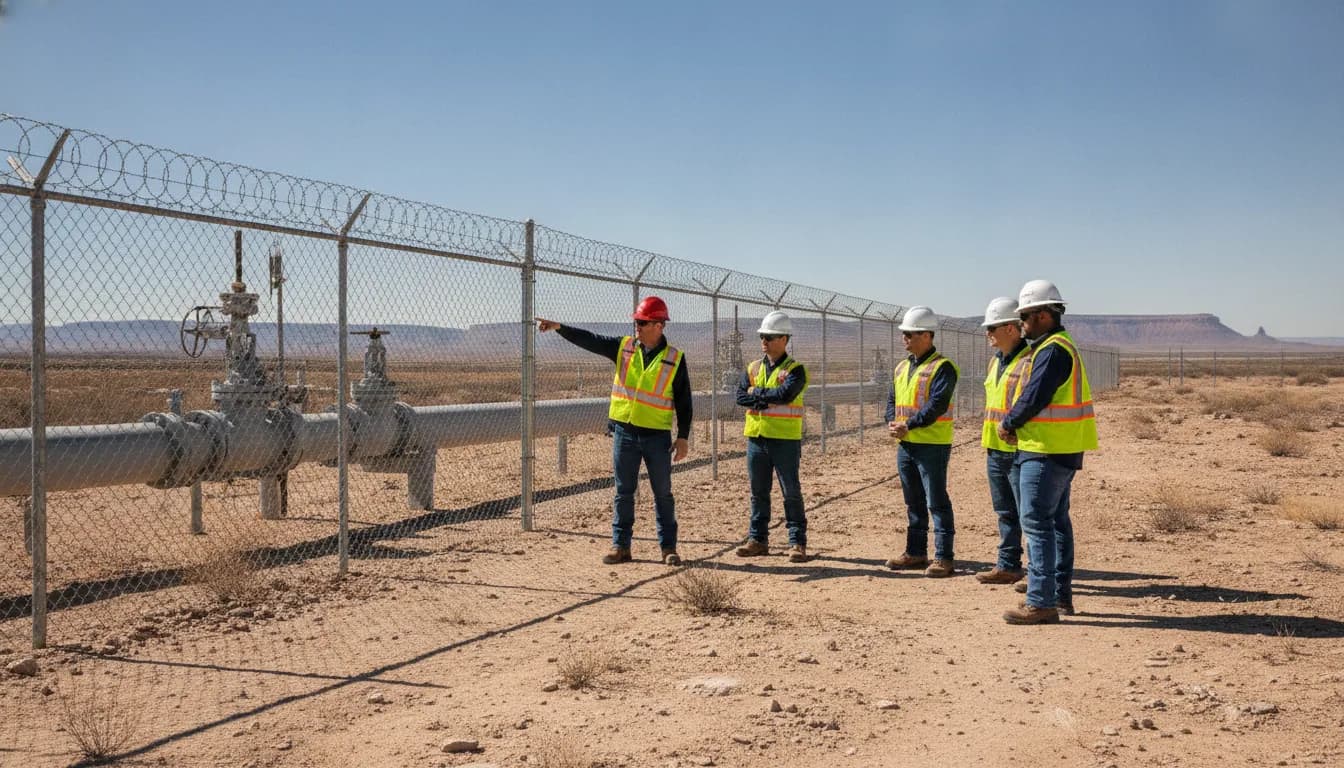
Pipeline work rarely fits a single training checklist. Operators, contractors, and supervisors may share a jobsite, but their responsibilities depend on the tasks they perform. The operator's written program defines the qualification framework, while the worksite determines the hazards workers must recognize and control.
Pipeline safety compliance training should connect role-specific instruction to the operator's written Operator Qualification (OQ) program, covered-task evaluations, and the ability to recognize and respond to abnormal operating conditions. Under 49 CFR Part 192, Subpart N, qualification is tied to assigned covered tasks and responding to conditions that may threaten people, property, or the environment.
A defensible program also separates federal requirements from company policy and documents how changes, supervision, and contractor responsibilities are communicated. The foundation is understanding what qualifies as a covered task and how competency is evaluated in practice.
What Pipeline Safety Compliance Training Must Cover
Pipeline safety compliance training must prepare each person to perform assigned covered tasks safely, demonstrate competency through evaluation, and recognize and react to abnormal operating conditions. The exact scope depends on the operator's written qualification program and the pipeline system, procedures, and equipment involved.
The Pipeline and Hazardous Materials Safety Administration (PHMSA) Operator Qualification, or OQ. Rules apply to gas pipelines under 49 CFR Part 192, Subpart N, and hazardous-liquid pipelines under Part 195, Subpart G. Operators subject to Part 192 or Part 195 must maintain and follow a written OQ program. That program is the legal framework for deciding which work requires qualification and how the operator confirms that people are qualified. PHMSA's OQ overview summarizes this scope.
Start with the covered-task list
Training should begin with the operator's system-specific list of covered tasks, not with a generic course catalog. Under the Part 192 definition, a covered task is performed on a pipeline facility. Involves operations or maintenance, is required by Part 192, and affects pipeline operation or integrity. Those criteria help separate work subject to OQ from general orientation, site rules, or useful but non-qualifying safety instruction. The applicable regulation is set out in 49 CFR Part 192, Subpart N.
Measure competency, not attendance
Completion of a class alone does not establish the required competency. An individual is qualified when evaluated and able to perform assigned covered tasks. The operator's program may use methods such as written or oral examinations, work-performance history, on-the-job performance, on-the-job training, simulations, or other assessment. The practical standard is whether the worker can carry out the assigned task as defined by the operator's procedures. Evaluation intervals belong in the written program. Employers should not substitute an unsupported annual schedule for the intervals and triggers that apply to their program.
Include abnormal operating conditions
Competency also includes recognizing and reacting to abnormal operating conditions. These conditions may indicate a component malfunction, a deviation from normal operations, a condition exceeding design limits, or a hazard to people, property, or the environment. Training and evaluation should therefore connect task steps with the warning signs, decisions, communications, and protective actions workers are expected to use under the operator's procedures. Simulations or observed performance can support this work when they reflect realistic system conditions.
These OQ elements are regulatory requirements. Topics such as refresher coaching, scenario discussions, supervisor observations, and lessons-learned reviews may be strong best practices. But their value should not be presented as a federally prescribed course, duration, or frequency unless the applicable rule or the operator's written program requires it.
Who Owns Pipeline Safety Compliance Training for Operators, Contractors, and Supervisors?
Answer: The pipeline operator owns the written qualification program and remains accountable for verifying that every person performing covered tasks on its system is qualified, including contractor personnel. Contractors and supervisors have important execution and oversight duties, but they do not replace the operator's responsibility.
Effective pipeline safety compliance training starts with clear ownership. The operator identifies the covered tasks that apply to its facilities. Establishes the evaluation approach and intervals in its written Operator Qualification (OQ) program, and uses evaluation to confirm that individuals can perform assigned tasks. Qualification also includes recognizing and reacting to abnormal operating conditions. These duties apply to the operator's own personnel and to contractors working on the operator's pipeline system.
| Role | Primary responsibility | Practical control |
|---|---|---|
| Operator | Maintain and follow the written OQ program; identify covered tasks and verify qualification. | Set system-specific requirements, evaluate personnel, communicate task changes, and retain evidence. |
| Contractor | Provide personnel who meet the operator's OQ requirements for the covered work they perform. | Submit qualification information, follow the operator's procedures, and resolve gaps before assignment. |
| Supervisor | Direct work within the person's demonstrated qualification and apply the operator's controls at the job site. | Confirm assignments, brief the crew, observe performance where required, and escalate changes or concerns. |
PHMSA guidance is direct on contractor accountability: an operator must ensure that contractors and operator employees performing covered tasks meet the operator's program requirements. A contractor is not independently required by the OQ rule to maintain a separate written OQ program. If a contractor uses its own program, the operator must verify that it meets the operator's requirements. Contract terms and client prequalification may add expectations, so employers should document how those expectations align with the controlling OQ program. Review contractor safety management practices for a broader coordination framework.
Supervisors are often the point where a written program becomes field behavior. They should confirm that assigned workers are qualified for the specific covered task. Ensure that unqualified personnel are directed and observed by a qualified individual when the rule permits that arrangement, and stop or escalate work when conditions change. A job hazard analysis process can support pre-job planning, but it does not substitute for the operator's OQ evaluation or qualification records.
The operator must also respond when there is reason to believe a person's performance contributed to a Part 191 incident or that the person is no longer qualified. Re-evaluation, change communication, and documented assignment decisions keep responsibility visible instead of allowing it to disappear between the operator, contractor, and supervisor.
How Should Hazard Communication and Emergency Readiness Be Taught?
Effective training connects the hazards workers may encounter at a specific site with the information, communication routes, and actions they need during normal work and an emergency. It should be understandable, role-specific, and reinforced through employer-controlled practice rather than treated as a one-time presentation.
Start with the site, not a generic slide deck. Identify the materials, processes, equipment, and conditions that can expose workers to harm. For chemical hazards, training should explain how employees can recognize the hazards. Find and understand labels and safety data sheets, follow protective measures, and report questions or changing conditions. OSHA's hazard communication publication provides a useful framework for explaining these information duties in plain language.
That site-specific approach also helps connect hazard communication with the operator's existing qualification program. A worker may need to understand what an alarm means, which areas require evacuation or isolation. And when a condition must be reported before the worker can safely continue a covered task. Training should make those boundaries explicit. General awareness does not replace the operator's evaluation of whether an individual is qualified for an assigned covered task.
Make emergency actions concrete
Emergency readiness training should walk workers through the employer's emergency action plan. Under OSHA's 1910.38 standard, an applicable plan addresses how emergencies are reported, how workers evacuate or account for personnel, and what responsibilities designated employees have. The lesson should use the actual alarm and notification methods at the facility, including radio channels, call trees, muster locations, and escalation contacts. Remote crews may need a different communication sequence than workers at a staffed control center.
Explain roles before an incident occurs. Workers should know who has authority to initiate an evacuation or shutdown under site procedures, who contacts emergency services, who accounts for personnel, and how contractors receive instructions. Supervisors should understand how to pause work, protect people from immediate exposure, and escalate conditions they cannot safely control. The OSHA training requirements publication can help employers organize training around the hazards and duties that apply to their workforce.
Employers should determine whether drills, tabletop exercises, or other practice activities are appropriate for their operations and risks. Unless a cited rule applies, the frequency and format are employer-controlled best practices, not numbers to invent. After an exercise or event, review what workers understood, where communication failed, and whether procedures, equipment, or training need revision. A worker who sees an unrecognized hazard, abnormal condition. Or loss of communication should stop or secure the work when authorized by procedure and promptly escalate it through the designated chain. That feedback loop keeps oil and gas worker safety training connected to the conditions crews actually face.
How Do Operators Coordinate Contractors and Report Changes?
Answer: The operator owns the qualification system for covered tasks, including work performed by contractors. Effective coordination starts before mobilization, confirms who is qualified for which task, communicates procedure changes to affected workers, and assigns clear ownership for reporting and follow-up.
Contractor management should begin with a documented pre-job alignment. Review the scope of work, identify which activities are operations or maintenance tasks that affect pipeline operation or integrity. And define the boundary between covered tasks and supporting work. A practical contractor safety management practices process can support this review, but it does not replace the operator's written operator qualification (OQ) program.
- Align the work scope. Before work starts, the operator and contractor should confirm the task steps, applicable procedures, site hazards, emergency contacts, supervision expectations, and stop-work authority. A job hazard analysis process can help the team break the assignment into recognizable steps and controls. Label these as employer practices unless a specific regulation or the operator's OQ program makes them mandatory.
- Verify qualifications and boundaries. Under the OQ rule, the operator must ensure that contractor personnel performing covered tasks meet the operator's program requirements. A contractor does not independently have to maintain a separate written OQ program under the rule. If it uses one, the operator must verify that it meets the operator's requirements. The operator should confirm the individual, covered task, qualification method, and current status before assignment. An unqualified individual may perform a covered task under Part 192 when directed and observed by a qualified individual, within the applicable program requirements.
- Communicate changes before execution. Operators must communicate changes that affect covered tasks to the people performing those tasks. Employer practice should add a controlled briefing, acknowledgement, and version record so field personnel are not relying on an outdated procedure. Changes to equipment, work methods, hazards, or controls should trigger a review of whether additional evaluation is needed.
- Report, learn, and assign follow-up. Establish one owner for receiving field observations, near-miss information, incident reports, and contractor concerns, then route each item to the responsible operator or supervisor. If the operator has reason to believe a person's covered-task performance contributed to a Part 191 incident or that the person is no longer qualified. The operator must evaluate that individual. Employer practice can then use the finding to update procedures, brief affected contractors, and strengthen industrial hazard monitoring practices where exposure or changing conditions are involved.
The regulation establishes operator responsibilities; the meeting cadence, forms, escalation channels, and learning-review format are generally operator-controlled practices. Keeping that distinction visible helps contractors understand what is legally required, what the operator's program requires, and who is accountable for each next action.
What Training Records Make a Pipeline Program Audit-Ready?
Answer: An audit-ready file connects each person to the covered pipeline tasks they may perform. Shows when and how qualification was established, and preserves the supporting evidence for the required period. It should be specific enough for an operator to verify current qualification without reconstructing the history from scattered emails or spreadsheets.
Under the operator qualification rules, the operator must maintain records demonstrating compliance. The qualification record should identify each qualified individual, the covered tasks that person is qualified to perform. The dates of current qualification, and the method or methods used to establish qualification. Those fields create the basic identity and status trail an auditor or internal reviewer needs. The governing record rule is stated in 49 CFR 192.807.
Document the task, method, and current status
A useful record does more than say that someone completed training. It identifies the specific covered task and ties the qualification to a recognized method. Such as a written or oral examination, work performance history review, on-the-job performance, on-the-job training, simulation, or another permitted assessment. Include the current qualification date and make status easy to review before assignment. If a person is no longer qualified, the file should not leave that change ambiguous.
Supporting records must be maintained while the individual is performing the covered task. In practice, that means the qualification evidence should remain accessible to the people assigning work, not only in an archive used after an incident. A job hazard analysis process can help connect the task, work conditions, controls, and crew briefing to the qualification record, but it does not replace the operator's qualification documentation.
Preserve prior records without mixing program scopes
Prior qualification records, along with records for individuals who no longer perform covered tasks, must be retained for five years under the cited rule. That is a specific regulatory retention period, not a reason to invent additional periods for every related document. Employers should also maintain a controlled review process so expired or changed qualifications are identified before work is assigned.
Safety qualification records should remain distinct from drug and alcohol program records. PHMSA operator drug testing rules address a separate Part 199 and DOT testing compliance function. The PHMSA operator drug testing rules resource can help with that separate program, but a drug test or testing record does not by itself demonstrate qualification for a covered pipeline task.
Talk with Patriot Safety and Services LLC about your pipeline safety compliance training process.
Frequently Asked Questions
What regulations govern pipeline safety compliance training?
The applicable rules depend on the pipeline system and the work being performed. For gas pipelines, 49 CFR Part 192 Subpart N establishes minimum operator-qualification requirements for people performing covered tasks. Hazard communication, emergency actions, and site-specific employer procedures may also apply. Use the operator's written program to connect each assignment with the required qualification, evaluation, and safety controls. Review Part 192 Subpart N for the federal OQ requirements.
What is the difference between 49 CFR Parts 192 and 195?
Part 192 addresses the transportation of natural and other gas by pipeline, while Part 195 addresses the transportation of hazardous liquids by pipeline. Both include operator-qualification requirements, but the applicable subpart and covered-task program must match the system. Confirm the governing part before assigning training or evaluation, rather than treating one program as interchangeable with the other. See Part 195 Subpart G for hazardous-liquid OQ requirements.
Can a contractor perform a covered task before completing qualification?
In limited circumstances, an unqualified person may perform a covered task when directed and observed by a qualified individual. The operator remains responsible for ensuring contractors and vendors comply with its OQ program, so the arrangement should be documented before work starts. Contractor orientation does not replace task-specific qualification or the operator's required evaluation process.
When should an operator reevaluate a qualified worker?
Reevaluation is appropriate when the operator has reason to believe a worker is no longer qualified or that the worker's performance contributed to an incident. The program should also communicate changes that affect covered tasks to the people performing them. Record the reason for reevaluation, the covered task involved, the evaluator, and the resulting qualification decision so the process is clear during an audit.
Contact us to strengthen your compliance process
Clear role expectations, documented training, and coordinated workforce support can help your team maintain a more consistent approach to pipeline safety compliance. Patriot Safety and Services LLC can help you discuss your training and workforce compliance needs without treating operational qualification responsibilities as one-size-fits-all. Schedule a consultation about pipeline safety compliance training and workforce compliance support.