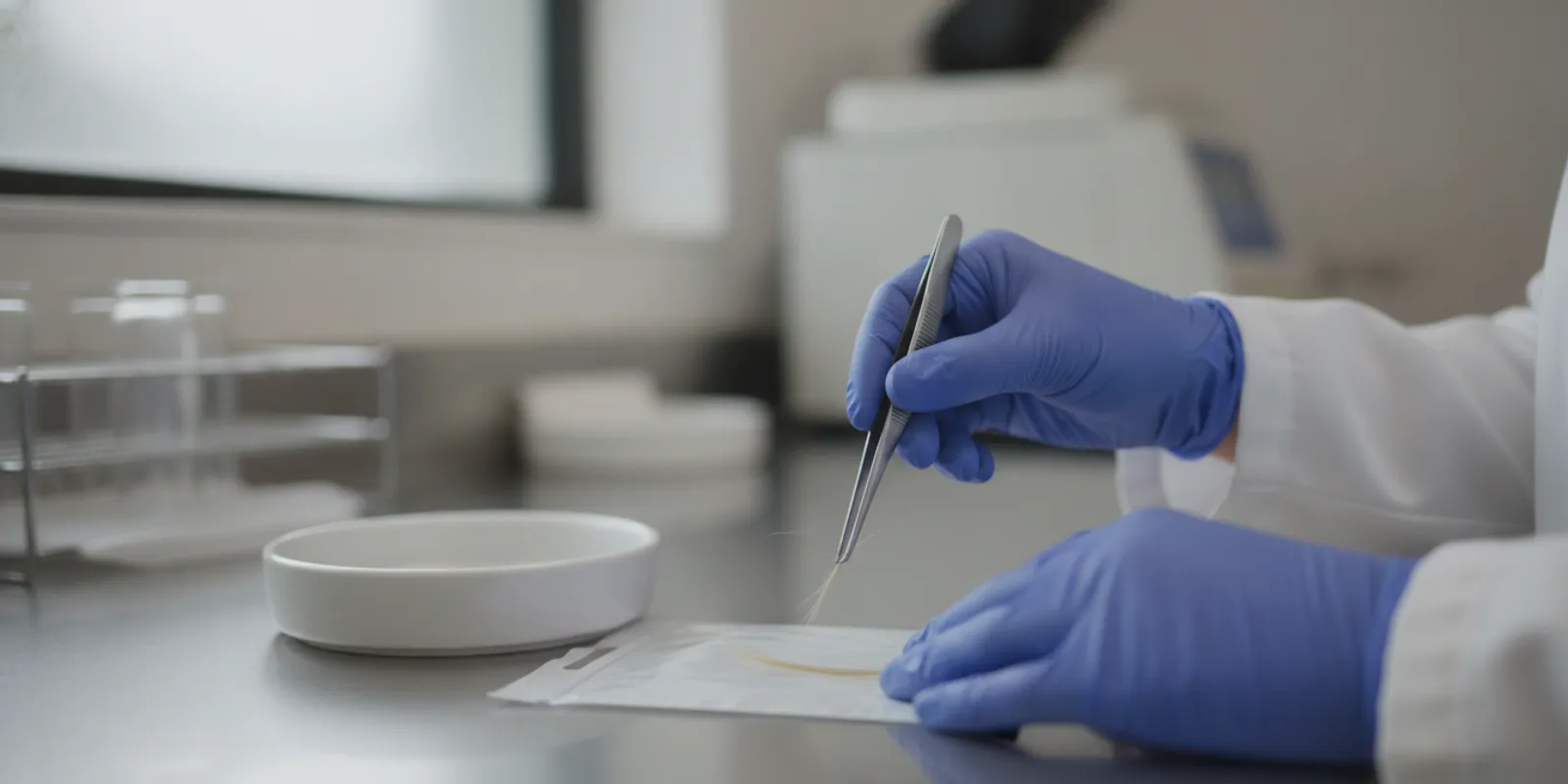
Employers asking how far back does a hair follicle drug test go for employment are usually looking for a practical answer: a standard scalp-hair test is commonly used to assess a pattern of drug use over roughly the previous 90 days. That is an estimate, not an exact calendar record. The sample, substance, lab method, and individual hair growth all affect what the result can show.
Discuss a testing plan with Patriot
How far back does a hair drug test usually look?
A typical employment hair test uses a small sample cut close to the scalp. Laboratories often analyze a segment of scalp hair representing about three months of growth. That is why the method is commonly described as having an approximately 90-day lookback period. It does not mean every test can identify the precise day a person used a substance or prove use throughout that entire period.
Hair grows at different rates, and the tested length matters. A lab may test a particular segment, and its procedures determine how the segment is prepared and analyzed. If the sample is shorter than the usual segment, the period it can represent may be shorter. If the sample comes from somewhere other than the scalp, growth rates and timing can differ, so a scalp-hair estimate should not be applied automatically.
There is also a delay before a substance or its metabolites become detectable in newly grown hair above the scalp. A hair test is therefore not a reliable way to answer whether someone used a substance very recently, and it is not a measure of present impairment. When timing or a recent event is the question, an employer should discuss whether another testing method is more appropriate.
What does the 90-day window mean in practice?
Think of the result as a view of a defined portion of hair, not a timestamp. Hair testing is often chosen when an employer wants a longer historical window than a single urine or oral-fluid collection generally provides. But a positive result does not give a precise date, frequency, dose, or the circumstances of use. A negative result also does not establish that no substance use occurred at any time.
For example, an employer who collects a scalp sample in October and requests a standard segment may receive information associated with a period of hair growth preceding collection. The test cannot reliably divide that period into exact weeks or identify the date of a particular event. Policies should avoid describing the result as a complete 90-day history or as proof of current behavior.
The term “hair follicle test” is common in conversation, but the collected material is generally the hair shaft cut from the head, not the follicle pulled out of the skin. Using clear terms in policies and worker communications helps set realistic expectations. Employers can review the available drug and alcohol testing services when considering which method fits their program.
What can change the lookback or affect a result?
Several practical factors influence what a hair result can and cannot tell an employer:
- Collection location and sample length: Scalp hair is the basis for the familiar approximate 90-day explanation. Body hair grows differently and can represent a less defined period. The laboratory’s collection and testing protocol matters.
- Growth variation: Hair does not grow at one identical rate for every person. A segment length is therefore an estimate of time, not a precise ruler.
- Recent use: A new use may not be reflected in hair immediately. The method is not designed to identify very recent use or impairment at the time of collection.
- Hair availability and condition: A collector and laboratory need a suitable specimen. Hair treatments or sample characteristics may affect interpretation; employers should ask the provider how its procedures address these issues rather than assume all tests work alike.
- External contamination: Drug material on hair can complicate interpretation. Proper washing, laboratory cutoffs, confirmation procedures, and qualified review are important safeguards, but a test result should still be interpreted within its limitations. Lawyers for Civil Rights has raised concerns about the accuracy of hair testing and the possibility of false positives from environmental exposure in its discussion of hair drug testing limitations.
These qualifications do not make every hair test unusable. They do mean an employer should select a method based on the actual question and apply it consistently under a carefully written policy. Do not promise applicants a precise date range or suggest that a hair result can determine whether someone is currently impaired.
What should employers avoid assuming about hair test results?
One common mistake is treating a typical detection window as a guarantee. The approximate 90-day description helps explain why employers consider hair testing, but it does not guarantee that every sample covers exactly 90 days. Hair growth, sample source, segment length, collection conditions, and the laboratory’s protocol affect the interpretation. Policy language should use qualified terms such as “approximately” and should not make claims the provider cannot substantiate.
A second mistake is using one testing method to answer every question. A longer historical window does not necessarily make a method more useful after a specific incident or when the employer needs information about a recent period. Match the testing decision to the circumstances, written policy, and any governing requirement. If several methods are available, compare them with the provider before creating a rule managers may later struggle to apply.
Employers should also avoid assuming that a result alone answers every employment question. A laboratory result is one part of a process. The applicable policy, any review steps, and the employer’s legal obligations remain important. Make sure a non-negative result is handled through the agreed procedures, and do not describe it as proof of impairment at work or as a precise account of a person’s behavior.
Finally, do not communicate the method as infallible. Testing has limits, including the possibility that contamination or other sample factors can complicate interpretation. Explain what the process can indicate, how the provider handles specimen quality and review, and whom the individual or employer should contact with a question. This balanced approach supports a credible program without overstating what a test can establish.
How does employment hair testing work?
Collection and laboratory analysis typically involve several controlled steps. The employer should use a qualified provider and explain the process before a test is ordered.
- Choose the testing purpose and panel. Determine whether the test is for pre-employment screening or another permitted purpose, and confirm the substances and method requested under the employer’s policy.
- Arrange collection. A trained collector obtains the sample according to the provider’s instructions. The collection location, sample amount, and labeling are recorded.
- Document specimen handling. Chain-of-custody procedures track the sample from collection through laboratory processing. Accurate identification and records are essential if a result is later questioned.
- Screen and confirm as appropriate. A laboratory analyzes the sample using its procedures. A preliminary screen and any required confirmation should not be treated as interchangeable; employers should ask the provider how non-negative results are reviewed and reported.
- Review and communicate results appropriately. Follow applicable law, company policy, and the provider’s instructions for result review, notices, and next steps. Limit access to records to people with a legitimate role.
Keep the process neutral and consistent. A hair test should not be used as a shortcut around a sound policy, fair hiring procedures, or legal review. Employers building a broader program can also examine workplace drug testing policy considerations and compliant screening practices.
How does hair testing compare with other methods?
There is no single best testing method for every workplace. The right choice depends on the employer’s objective, applicable rules, collection logistics, and how quickly the result is needed. The table summarizes general distinctions; specific detection periods and procedures vary by test and provider.
| Method | Typical use or window | What to keep in mind |
|---|---|---|
| Hair | Often used for a longer historical view, commonly described as about 90 days for a standard scalp sample | Not an exact timeline and not a measure of current impairment; availability and sample source affect the estimate. |
| Urine | Often selected for employment testing and many established workplace programs | The detection period depends on the substance, use pattern, cutoff, and other factors; it generally answers a different timing question from hair. |
| Oral fluid | Can be considered when a shorter, more recent-use window is relevant | Collection and detection depend on the protocol and substance; it is not a substitute for every other method. |
| Alcohol testing | Used to assess alcohol under the applicable program and method | Choose the method and timing to match the policy and governing requirements; it is distinct from a hair drug test. |
For DOT-regulated testing, employers must follow the applicable federal program and its permitted methods. A hair test should not be presented as a substitute for a required DOT test. Keep DOT and non-DOT processes separate in policy, ordering, records, and communications. Patriot provides information about DOT and non-DOT compliance and DOT drug testing requirements for employers evaluating their program.
How should an employer decide whether to use hair testing?
Start with the question the test is meant to answer. If the business needs a longer historical window for a non-DOT employment policy, hair testing may be worth evaluating. If the concern is recent use, a prompt post-incident response, or a regulatory requirement with a specified method, a different method may be a better fit. Method selection should follow the actual purpose, not an assumption that a longer window is always better.
Before adopting hair testing, work through these questions:
- What does the policy require? State when testing can occur, what method may be used, and how results are handled. Check the rules that apply to the workforce and jurisdiction.
- Does the method answer the business question? A long lookback is not useful if the employer needs to know about very recent use or current impairment.
- Can the process be applied consistently? Define the roles responsible for ordering, collection coordination, result review, documentation, and communication.
- What happens after a non-negative result? Establish the appropriate review and next steps before testing begins. Do not make an employment decision based only on a misunderstood shorthand description of a result.
- How will the employer protect information? Limit access, store records appropriately, and communicate only what the relevant people need to know.
For a distributed workforce, compare access to collection options, turnaround expectations, and coordination across locations. For safety-sensitive or regulated roles, confirm the distinctions between company policy and regulatory requirements before rollout. Employers can use Patriot’s testing service information or contact team to discuss method selection and program logistics.
What should employers tell applicants and employees?
Explain the method in plain language. Tell the person what kind of test is being used, when it is required under the employer’s policy, and how the employer will communicate next steps. If the policy uses hair testing, describe the usual approximate lookback without implying that the result identifies exact dates or proves impairment.
Consistency matters at every stage. Apply the written policy consistently to similarly situated applicants or workers, use trained collection personnel, and keep documentation of the order and handling process. When an unusual situation arises, such as insufficient scalp hair, a question about the sample, or a disputed result, follow the provider’s documented procedure and seek qualified guidance rather than improvising.
Employers should also review policies periodically as workplace needs and applicable requirements change. A qualified testing provider can explain its collection and reporting process, but employers remain responsible for ensuring their program fits the rules and commitments that apply to them. If a company operates both DOT-regulated and non-DOT roles, make those program boundaries clear to managers and workers.
How can employers put a testing method into practice?
A method decision becomes useful only when managers can follow the process reliably. Start by writing a short rationale for the selection: the workforce or role covered, the purpose of testing, and why the chosen method fits that purpose. This record helps keep operational choices aligned with the written policy and gives managers a consistent explanation when applicants ask why the employer uses hair testing rather than another option.
Next, map the workflow from the hiring decision to final record handling. Identify who is permitted to order a test, who coordinates the collection, who receives a report, and who is responsible for communicating next steps. Define what happens when a candidate cannot provide the expected sample or when a collection appointment needs to be rescheduled. A manager should know whom to contact rather than make an exception informally.
Set expectations with the testing provider before launch. Ask what sample is collected, how it is labeled and transported, which analysis and review steps apply, how reports are delivered, and how the provider handles questions about an unusual specimen. Confirm realistic turnaround expectations and the process for resolving a collection or reporting issue. Do not promise a specific result date unless the provider confirms it for the relevant situation.
Prepare a simple communication plan for applicants and employees. Use the same plain-language description in policy documents, notices, and manager guidance. Explain that a scalp-hair test is commonly associated with an approximate three-month lookback, but that the estimate is not exact and the method does not establish current impairment. Avoid language implying a person can calculate an exact use date from a result.
Finally, review whether the process is working. Check periodically that the policy still matches the roles covered, that staff know the DOT/non-DOT boundary, that records are maintained appropriately, and that collection procedures remain consistent across locations. When the workforce, regulations, or business purpose changes, revisit the selection with qualified compliance guidance. These practical steps make testing a defined part of a workforce policy, not a one-off decision made differently by each supervisor.
Frequently asked questions about employment hair tests
Can a hair test show the exact day someone used a drug?
No. A result reflects analysis of a hair segment and does not reliably identify the exact day, dose, or frequency of use. Treat the lookback as approximate rather than a date-by-date history.
Does a hair test detect very recent use?
Not immediately. Newly used substances need time to become detectable in hair as it grows. If recent use is the key concern, discuss a method designed for the relevant timing with a qualified provider.
Does a negative hair test prove there was no drug use?
No. A negative result applies to the tested sample, panel, cutoffs, and procedures. It cannot establish that no use occurred at any time or outside the period and conditions the test can detect.
Is an employment hair test the same as a DOT drug test?
No. Employers should not treat hair testing as a replacement for a method required by a DOT program. Keep regulatory testing separate from any non-DOT policy and confirm the applicable requirements before ordering a test.
What if the person does not have enough scalp hair?
Ask the testing provider what alternatives its procedures allow and how a different sample source affects interpretation. Do not assume a body-hair result has the same timing estimate as a standard scalp-hair sample.
Talk with Patriot about your testing needs
A well-designed employment testing program matches the method to the question, explains its limits, and follows consistent procedures from collection through review.