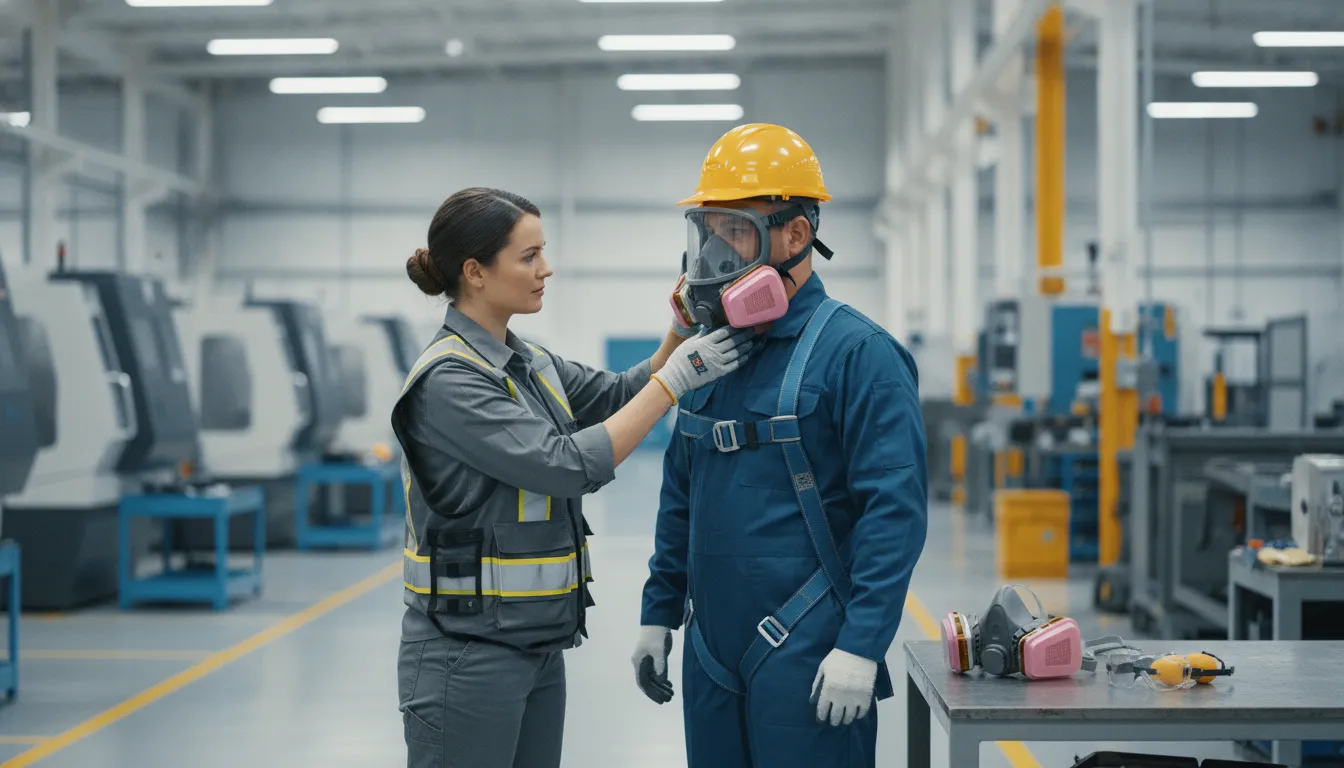
Respirators are not a stand-alone fix for a dusty, fume-filled, or oxygen-deficient workplace. Employers first need to understand the hazard, determine whether feasible engineering controls can reduce exposure, and then select protection that fits the task and the worker. OSHA places responsibility for establishing and maintaining the program on the employer, with procedures tailored to actual workplace conditions.
Contact Patriot Safety and Services LLC for occupational health and compliance support.
Respiratory protection program requirements include a written, worksite-specific program, hazard assessment, suitable respirator selection, medical evaluation, fit testing when required, training, maintenance, and ongoing evaluation. OSHA requires the program to cover each employee who must use a respirator and to be updated when workplace changes affect respirator use.
A practical program connects these duties instead of treating documentation, equipment, and employee readiness as separate tasks. The starting point is defining what the program must cover and how its controls fit together.
What Are the Core Respiratory Protection Program Requirements?
At its core, a compliant respiratory protection program identifies when respirators are needed. Controls airborne hazards where feasible, provides suitable equipment, and documents worksite-specific procedures that are kept current.
Define the program's scope and responsibility
OSHA's respiratory protection standard applies across general industry, shipyards, marine terminals, longshoring, and construction. The employer is responsible for establishing and maintaining the program, and the program must cover every employee required by the standard to use a respirator. That responsibility is broader than handing out masks. It includes matching the program to actual tasks, hazards, locations, and employees.
A written program is required whenever respirators are necessary to protect employee health or whenever the employer requires their use. The procedures must be worksite-specific, rather than copied into a generic policy that does not reflect how work is performed. OSHA also requires the program to be updated when workplace conditions change in ways that affect respirator use. See the OSHA respiratory protection standard for the controlling requirements.
Follow the hierarchy of controls before relying on respirators
The first objective is to prevent atmospheric contamination through feasible engineering controls. Depending on the hazard, that may mean enclosing a process, improving local exhaust ventilation, isolating the source, or otherwise reducing airborne exposure at its origin. Respirators are used when effective engineering controls are infeasible or while those controls are being implemented.
When respiratory protection is necessary, the employer must provide a respirator to each affected employee and select equipment that is applicable and suitable for its intended purpose. Selection should reflect the contaminant, concentration, work conditions, and the level of protection needed. OSHA defines an assigned protection factor as the workplace protection expected when the respirator is used within an effective. Continuing program, so equipment selection cannot be separated from the program's controls and administration.
These requirements establish the foundation. Hazard assessment, medical evaluation, fit testing, training, maintenance, and ongoing evaluation then turn the written policy into a functioning protection system.
How Do You Build a Written, Worksite-Specific Program?
Answer: Assign a qualified program administrator, identify every covered employee, document procedures for the actual worksite, keep the program current, and make the written program available for employee review.
Assign ownership and define the program scope
The employer remains responsible for establishing and maintaining the respiratory protection program. Name a program administrator who has the knowledge and authority to coordinate its implementation, review conditions, and resolve gaps. The program must cover each employee required by the standard to use a respirator, rather than treating respirator use as an informal practice limited to a single crew.
Start by documenting the work areas, tasks, hazards, required respirators, and employees covered. Link those decisions to the applicable hazard assessment and selection records. OSHA requires a written program with worksite-specific procedures whenever respirators are necessary to protect employees or the employer requires their use. See the standard's requirements for a written respiratory protection program.
Use a practical implementation sequence
- Assign the administrator. Record the person's responsibilities, authority, and contact information in the program.
- Define covered employees and tasks. List the work areas, job duties, exposure conditions, and respirator use that the program addresses.
- Write site-specific procedures. Document how the employer will handle selection, required medical evaluation, fit testing, training, use, maintenance, and program evaluation. Procedures should describe what employees and supervisors actually do at this worksite.
- Set a review process. Update the program when workplace conditions change in a way that affects respirator use. The administrator should also track changes to tasks, hazards, equipment, and employee responsibilities.
- Provide access and retain the current copy. Keep the written program and applicable standard where employees can review them. A program template calls for maintaining the program in the administrator's office and making it available to employees who request review.
This sequence turns respiratory protection program requirements into an accountable system. It also gives employees a clear reference for their responsibilities instead of relying on unwritten expectations.
How Should Employers Assess Hazards and Select Respirators?
Answer: Start with the hazard assessment, prioritize feasible engineering controls, and then select an appropriate NIOSH-approved respirator for the remaining risk. The choice must match the contaminant, work conditions, and intended purpose, not simply the model that is easiest to issue.
Assess the exposure before choosing equipment
OSHA places prevention first. Employers should use accepted engineering controls to prevent atmospheric contamination whenever feasible. Respirators are used when effective controls are not feasible or while those controls are being implemented. When respiratory protection is necessary, the employer must provide a respirator that is applicable and suitable for the intended purpose. A documented workplace exposure monitoring process can help connect the work activity and airborne hazard to the selection decision.
The assessment should also account for whether the selected equipment can provide the needed level of protection under the employer's continuing respiratory protection program. OSHA calls this expected workplace protection the assigned protection factor, or APF. APF is not a universal rating that can be considered apart from the program. It describes the protection a respirator or class of respirators is expected to provide when the program is implemented effectively.
Compare the two main respirator categories
| Type | How it supplies breathing air | Selection focus |
|---|---|---|
| Air-purifying respirator | Passes ambient air through a filter, cartridge, or canister that removes specific contaminants. | Confirm the element is suitable for the identified contaminant and intended use. |
| Atmosphere-supplying respirator | Delivers breathing air from a source independent of the ambient atmosphere. | Consider when the surrounding atmosphere cannot be addressed by filtering ambient air. |
NIOSH certifies respirators, and OSHA program guidance calls for selecting an appropriate NIOSH-approved respirator. Keep the assessment and selection rationale with the written, worksite-specific program. Revisit it when workplace conditions affecting respirator use change, rather than treating the initial selection as permanent. That record gives supervisors a clear basis for reviewing whether the equipment remains suitable.
Read OSHA's respiratory protection standard for the governing definitions and requirements.
What Medical Evaluation and Fit Testing Must Come First?
Answer: Medical evaluation comes before an employee is required to use a respirator or participate in fit testing. Once the employee is cleared to use respiratory protection, the employer must complete the appropriate fit testing for any tight-fitting respirator and maintain the related user practices.
Medical evaluation comes before required use
A respiratory protection program should identify whether each covered employee can safely wear a respirator. OSHA's standard includes a medical evaluation questionnaire in Appendix C. And NIOSH identifies medical evaluation and determination of an employee's ability to wear a respirator as a core program element. The evaluation must occur before fit testing or required respirator use, so a fit-test result is not treated as a substitute for medical review.
The evaluating clinician makes the medical determination. Employers should provide the required information through the program's established process, document completion appropriately, and address any work or health changes through the clinician and program administrator. This keeps the sequence clear: evaluate first, fit test next, then support correct use in the field.
Fit testing applies to tight-fitting respirators
Employees who must wear tight-fitting respirators are fit tested before they are allowed to use one and at least annually thereafter. Repeat testing is also needed when a physical change could affect the face seal, such as an obvious change in body weight or facial scarring. OSHA's Appendix A applies to both qualitative and quantitative fit-test methods.
The process should allow the employee to choose from enough models and sizes to find an acceptable fit. The employee also needs instruction on putting on the respirator, positioning the facepiece, setting strap tension, and recognizing an acceptable fit. These steps support the fit test, but they do not replace the broader written program, hazard assessment, training, maintenance, and evaluation requirements.
For a focused explanation of the employer-side process, review the respirator fit-testing requirements. After a respirator is selected and fit tested, the user must conduct a seal check each time it is worn. Patriot supports qualitative and quantitative respirator fit testing through its occupational health services, consistent with the program's need for an appropriate testing method.
What Training and Daily Use Practices Are Required?
Answer: Respirator training must be comprehensive and understandable, repeated on the schedule set by the program. Refreshed when conditions change, and reinforced with a user seal check every time the respirator is worn.
Make training understandable and practical
Training should give employees enough information and practice to use their assigned respirator correctly, not simply confirm that they attended a presentation. Employees need to understand when respiratory protection is required, why the selected equipment is appropriate. How to put it on and position it, and how to recognize an acceptable fit. The cited program example states that training must be comprehensive and understandable, and that it must recur annually and more often when necessary. Employers can reinforce these lessons with hazard-specific examples, such as OSHA welding safety training when welding fumes are part of the worksite risk.
Retrain after changes and check the seal every time
Annual training is a baseline in the cited program example, not a reason to wait when instruction no longer matches the job. Retraining is needed when a workplace change or a different type of respirator makes previous instruction obsolete. Examples can include a new task, process, work area, or respirator model. The program should identify who delivers retraining, how completion is documented, and how supervisors confirm that employees can apply the instruction during actual work.
Users must also conduct a seal check each time they put on a respirator. This check helps the wearer identify an obvious leak before entering the exposure area. It does not replace fit testing, and it should be performed according to the manufacturer instructions and the applicable procedure. Supervisors should address failed checks immediately rather than allowing work to continue with a compromised seal.
How Do Employers Maintain and Evaluate the Program?
Answer: Maintain the program through routine work area surveillance, air quality review, respirator care, accessible records, and documented evaluation. Update written procedures when workplace conditions affect respirator use, then provide employees a practical way to review the current program and its requirements.
Monitor conditions and maintain equipment
Work area surveillance helps confirm that the program still reflects actual conditions. Employers should review air quality standards and reassess whether existing controls and respirator procedures remain appropriate as tasks, materials, or work areas change. The evaluation should also examine inspection, cleaning, maintenance, and storage of respirators. These controls protect equipment condition and help ensure that assigned protection remains dependable during use.
Cleaning procedures should follow the applicable requirements in OSHA's respiratory protection standard. Maintenance records can document inspections, cleaning schedules, identified defects, corrective actions, and storage practices. When a condition could affect respirator use, the written program should be updated rather than left as a static policy.
Document review, access, and voluntary use
A complete evaluation should leave a clear record of what was reviewed, what problems were found, and how the employer corrected them. Keep the written program and the respiratory protection standard available for employee review. Clear access supports informed participation and makes it easier for employees to raise concerns about equipment, procedures, or changing work conditions. For broader compliance record practices, see this guide to OSHA program documentation.
Voluntary respirator use also requires attention. When an employee voluntarily uses a respirator, provide the information in Appendix D so the employee understands the applicable safe-use considerations. Include that step in the program's documentation and evaluation process, even when the respirator is not required by the employer.
Frequently Asked Questions
What are the OSHA requirements for respiratory protection?
Employers must provide suitable respirators when they are necessary to protect employee health, establish a written worksite-specific program. And maintain procedures for selection, medical evaluation, fit testing, training, use, maintenance, and program evaluation. The program must be updated when workplace conditions affecting respirator use change. OSHA's respiratory protection standard, 29 CFR 1910.134, applies to general industry, shipyards, marine terminals, longshoring, and construction.
How often is respiratory protection training required?
Training must be comprehensive and understandable, and it should recur annually or more often when necessary. Retraining is also needed when workplace conditions or the type of respirator changes enough to make prior instruction obsolete. The written program should identify who provides training and how the employer verifies that workers understand proper use.
What disqualifies you from wearing a respirator?
There is no universal list of disqualifying conditions that can replace an individual medical evaluation. Before an employee uses a required respirator or completes fit testing, a qualified clinician must determine whether the employee can wear it safely. The clinician makes that determination through the required evaluation process, including OSHA's Appendix C questionnaire when applicable. Employers should not make medical decisions based on assumptions.
How often must a tight-fitting respirator be fit tested?
Employees must be fit tested before they are allowed to use a tight-fitting respirator and at least annually afterward. A new fit test is also needed when physical changes could affect the face seal, such as facial scarring or an obvious change in body weight. Employees must perform a user seal check each time they put on the respirator.
How long does PAPR training take?
OSHA does not establish one universal training duration for every powered air-purifying respirator, or PAPR, task. Training should cover the specific respirator, its limitations, donning and use, required checks, cleaning, maintenance, storage, and emergency procedures in language workers understand. The employer's program administrator should determine the time needed to demonstrate competence and provide additional instruction when necessary.