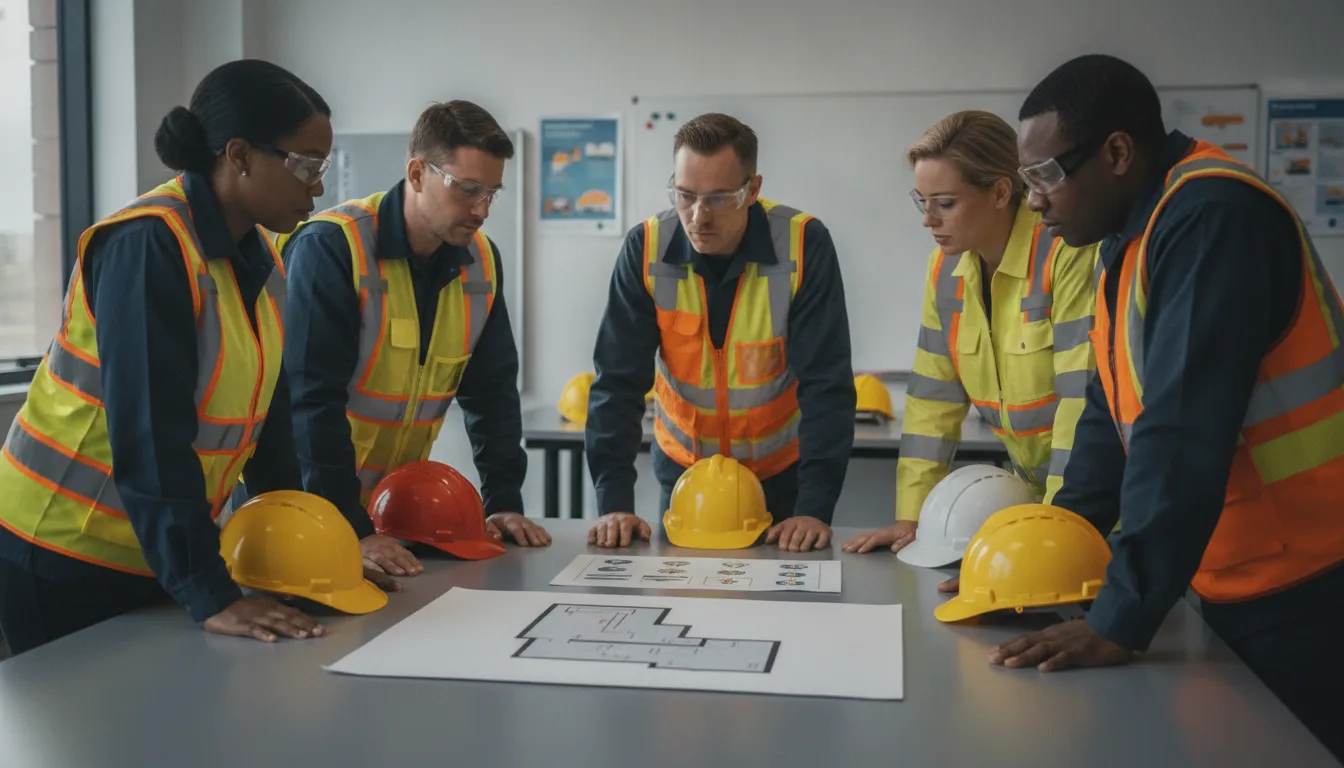
Useful safety meeting topics do more than fill a calendar slot. They help supervisors and employees identify hazards in the work they are about to perform, agree on practical controls, and leave with a clear action to verify. The best meetings are brief, specific to the worksite, and connected to what workers see during the shift.
Request a consultation with Patriot Safety and Services LLC
This guide gives employers a working list of topics organized by hazard, industry, and season. It also explains how to plan a focused discussion, encourage participation, document the result, and use the information to improve a safety program over time.
What makes a safety meeting effective?
Bottom line: An effective safety meeting addresses one or two current risks, gives workers room to contribute, and ends with an owner and a follow-up date for each action.
A meeting is not a substitute for required training, a job hazard analysis, an inspection, or a written procedure. It is a communication and feedback tool that connects those parts of the program to the work happening today. A warehouse discussion about pedestrian traffic, for example, should cover the current loading pattern, blind corners, and separation controls. Avoid a general reminder to “be careful.”
Before choosing a topic, review recent near misses, inspection findings, production changes, weather, new equipment, and questions raised by employees. Ask what is different from the last meeting and what could cause harm if the team relies on routine alone. A focused discussion is easier to understand and more likely to produce a useful correction than a long list of unrelated reminders.
OSHA’s Recommended Practices for Safety and Health Programs emphasize worker participation, hazard identification, prevention and control, training, and program improvement. Those principles provide a useful framework for turning a meeting from a one-way announcement into part of an active safety process.
Which safety meeting topics fit common workplace hazards?
Bottom line: Choose the topic that matches the highest current exposure, then discuss the task, the control, and the sign that the control is working.
The following topics can be adapted for construction, manufacturing, logistics, oil and gas, healthcare, offices, and other workplaces. Each topic should be narrowed to a specific task or area before the meeting begins.
Housekeeping, slips, trips, and falls
Focus the discussion on the walking surfaces and obstructions workers actually encounter:
- Cords, hoses, spills, changes in floor level, temporary openings, and material stored in aisles.
- Locations workers avoid, or places where they have to step around an obstruction.
- The correct response for a spill or damaged surface, who can isolate the area, and how quickly the issue must be reported.
In a shop or warehouse, include dock edges, trailer transitions, and visibility around stacked materials. In an office or clinic, consider wet-floor controls, stairways, footwear, and clutter near exits.
Falls from ladders, roofs, scaffolds, and elevated platforms
Use a current task rather than a generic ladder lecture. Review access, inspection, setup, three-point contact, fall protection, dropped-object controls, and rescue planning where applicable. Ask what will change if the surface is wet, the work moves near an edge, or another crew enters the area. If a ladder, lift, scaffold, or roof system is involved, reference the applicable procedure and verify that workers know how to stop work when conditions no longer match the plan.
Struck-by hazards and mobile equipment
Talk through the movement of forklifts, trucks, cranes, loaders, aerial lifts, and delivery vehicles in the actual work area. Identify pedestrian routes, backing zones, spotter responsibilities, alarms, high-visibility clothing, and communication signals. Ask operators and pedestrians to describe the same route from their perspectives. A short walk to a blind corner or crossing can reveal a control that is missing from a written rule.
Electrical safety and lockout/tagout
Review the energy sources for the work, who is authorized to isolate them, how zero energy is verified, and what happens when a job changes hands. Include extension cords, temporary power, damaged tools, overhead lines, and the difference between a qualified and an unqualified worker where relevant. For servicing or maintenance, connect the discussion to the site’s energy-control procedure and machine guarding controls. Do not rely on a meeting to replace hands-on authorization training or the written steps required for the task.
Chemicals, safety data sheets, and personal protective equipment
Select a chemical or process employees will use that day. Review the label, the main routes of exposure, required controls, storage and transfer steps, spill response, and where the safety data sheet can be found. Ask workers what would make the task safer before PPE is considered. Then verify that the selected gloves, eye protection, respiratory protection, or protective clothing matches the hazard and that employees know the limits of the equipment. A useful follow-up is to inspect the work area and confirm that the control is available at the point of use.
Manual handling, ergonomics, and repetitive work
Discuss the lift, reach, push, pull, grip, vibration, or repetition that creates strain in a particular job. Ask workers to demonstrate the difficult part of the task and identify where a cart, lift table, adjustable surface, job rotation, or revised layout could help. Avoid reducing ergonomics to a reminder to “lift with your legs.” Link the discussion to the employer’s workplace ergonomics program and document whether an engineering or work-practice change is needed.
Heat, cold, weather, and changing conditions
Seasonal meetings should account for the work, the schedule, the clothing or PPE required, and the available recovery conditions. For heat, cover water, rest, shade, acclimatization for new or returning workers, symptoms that require action, and the supervisor’s response. For cold, discuss wet clothing, wind exposure, warming areas, visibility, and hand protection. Severe weather topics may include lightning, high winds, flooding, ice, wildfire smoke, or a shelter decision. Use the meeting to check whether the written plan and the current forecast agree.
| Topic family | Questions to ask | Useful evidence after the meeting |
|---|---|---|
| Falls and access | What changed in the work area, and how will access and fall protection be checked? | Inspection completed, correction assigned, access route verified |
| Mobile equipment | Where will people and equipment cross, and who controls the blind spots? | Route marked, spotter plan confirmed, damaged signal or alarm corrected |
| Energy control | What energy sources must be isolated, and how will zero energy be verified? | Procedure reviewed, authorized employees confirmed, gap escalated |
| Chemicals and PPE | What exposure is possible, and are the controls and supplies at the point of use? | SDS access checked, PPE inspected, storage or labeling correction assigned |
| Weather and health | What condition could change during the shift, and what triggers a pause or relocation? | Forecast reviewed, recovery area checked, supervisor response confirmed |
How should employers organize topics by industry and season?
Bottom line: Keep a core set of topics for every workplace, then add the hazards created by the industry, the current job, and the season.
Construction teams may need meetings on excavation, struck-by exposure, scaffolds, temporary power, concrete work, hot work, and coordination among multiple contractors. Manufacturing teams can focus on machine guarding, hazardous energy, material handling, chemical exposure, noise, and startup or changeover conditions. Logistics and fleet operations may need pedestrian separation, loading docks, vehicle inspections, backing, fatigue, and cargo securement discussions.
Oil and gas crews may need topics for line-of-fire exposure, pressure, confined spaces, hydrogen sulfide, hot work, process safety, and emergency response. Healthcare and office teams still need practical conversations about slips, violence prevention, ergonomics, infection-control procedures where applicable, emergency actions, and safe movement of people or equipment. A topic list should reflect how work is actually performed, not just the industry label on a policy.
Seasonal planning works best when it is tied to a decision point. Before summer field work, review heat controls and schedule changes. Before winter weather, review cold stress, visibility, slips, and travel. During hurricane, wildfire, or severe storm seasons, discuss alerts, shelter, evacuation, accountability, business continuity, and when work will stop. Use the employer’s emergency action plan as the source of truth for roles and procedures.
For construction-specific inspiration, the CDC and NIOSH provide Construction Toolbox Talks with hazard explanations, discussion questions, safety points, and solutions. These materials can help a supervisor prepare, but the final discussion still needs to reflect the employer’s equipment, site, procedures, and workforce.
How do you plan a focused safety meeting?
Bottom line: Prepare a short agenda around one exposure, use the worksite to make the discussion concrete, and leave time to hear what the team sees.
Before the meeting
Select a topic based on evidence, not convenience. Review the last inspection, near-miss report, incident trend, job hazard analysis, change in equipment, and planned work. Gather the procedure, photos, sample PPE, or equipment that will make the conversation specific. Decide what a successful meeting should produce, such as a corrected housekeeping condition, a revised pedestrian route, or an assigned review of a control.
Invite the people who perform or supervise the work. If contractors, temporary workers, or multiple shifts are affected, include them or provide an equivalent briefing. Schedule the meeting during paid work time where feasible, and make language or accessibility adjustments so the people closest to the hazard can participate.
During the meeting
Open with the task and the reason for the discussion. Explain the hazard in plain language, then ask workers what they have seen, what makes the task difficult, and what has changed. Review the control in this order: eliminate or substitute the hazard when possible, use engineering controls, set safe work practices, and use PPE as part of the full approach. Demonstrate the control when a demonstration is more useful than a lecture.
Keep questions concrete. A specific question, such as where a forklift will cross an aisle, is more useful than asking whether everyone understands forklift safety. Ask one person to repeat the stop-work or escalation step. Invite a dissenting view without turning the meeting into a blame exercise. Close by restating the decisions, the person responsible, and the time for verification.
After the meeting
Record the date, topic, work area, attendees or crew, key points, questions raised, actions, owners, and due dates. A sign-in sheet alone shows attendance, not understanding or correction. Attach a photo, inspection result, or completed action when it helps prove that the issue was addressed. Add unresolved items to the same tracking system used for inspections, incident actions, or job hazard analyses so they do not disappear when the meeting ends.
How can safety meetings improve participation and results?
Bottom line: Treat employee questions and reports as operating information, then close the loop by showing what changed because someone spoke up.
Workers are more likely to participate when the meeting is relevant, respectful, and connected to action. Supervisors should avoid interrupting a concern with a quick explanation or assigning blame before the facts are understood. If a concern cannot be fixed immediately, explain the interim control, record the owner, and communicate the decision. A later update is part of the meeting’s credibility.
Track a small set of measures that show whether the process is working. Examples include the percentage of assigned actions closed by the due date, repeat findings in the same area, and time from a reported hazard to a control. Also track attendance by affected crews and the number of useful suggestions that receive a response. Do not use attendance or a low injury count as the only proof of success. A strong reporting culture can increase the number of reported hazards while the employer is finding and fixing problems earlier.
Use trends to improve the next topic. Repeated housekeeping findings may point to storage design or staffing rather than another reminder. Questions about an emergency response step may show that the plan needs a drill. A near miss involving a machine may call for a change in guarding, layout, or maintenance coordination. A workplace incident investigation process can help the team look for underlying conditions instead of focusing only on an individual’s last action.
Safety meeting topics employers can use as a monthly calendar
Bottom line: A simple calendar is useful when it stays flexible enough to respond to current hazards and recent employee feedback.
- Week 1: Review a current job hazard analysis, change in work, or recent inspection finding.
- Week 2: Discuss a high-risk task such as energy control, elevated work, mobile equipment, or chemical handling.
- Week 3: Practice an emergency action, reporting route, stop-work decision, or first response.
- Week 4: Review open actions, worker suggestions, repeat findings, and one improvement to the safety program.
Adjust the calendar for the operation. A fast-moving construction project may need a brief meeting before each major phase. A stable office may need less frequent hazard-specific discussions but should still address changes, emergency readiness, and concerns raised by employees. The right schedule is the one that keeps information current without becoming a ritual disconnected from the work.
Request information about workforce safety and compliance support.
Frequently asked questions about safety meeting topics
Bottom line: Use these answers as a starting point, then confirm the topic against the employer’s hazards, procedures, and applicable requirements.
What is the best topic for a safety meeting?
The best topic is the one tied to the most important current exposure or a meaningful change in the work. Review recent near misses, inspection findings, planned tasks, seasonal conditions, and employee questions. A specific discussion about today’s work is usually more useful than a broad list of reminders.
How long should a safety meeting last?
There is no single ideal duration. A short, prepared discussion can be effective when it covers one clear hazard, gives workers time to participate, and records follow-up actions. If the topic requires demonstrations, hands-on practice, or required instruction, schedule enough time for that activity and do not treat a brief meeting as a replacement for formal training.
What should be documented after a safety meeting?
Document the date, topic, location or crew, participants, key discussion points, questions, decisions, action owners, due dates, and how completion will be verified. Keep supporting evidence such as a revised route, inspection result, photo, or completed correction when appropriate. Documentation should make it possible for another supervisor to understand what was discussed and what remains open.
How do you get employees to participate in safety meetings?
Make the discussion relevant to their work, ask open questions, show that reports receive a response, and avoid blame for raising concerns. Invite workers to identify hazards and test whether a proposed control is practical. When participation leads to a visible correction or an improved procedure, explain that connection at the next meeting.
Are toolbox talks the same as safety meetings?
They can serve a similar communication purpose, but the terms do not define the same legal or training requirement in every workplace. A toolbox talk is often a brief, task-focused discussion, while a safety meeting may cover program performance, inspections, incidents, or broader planning. Employers should use the format that fits the risk and separately complete any training, inspection, documentation, or regulatory duties that apply.