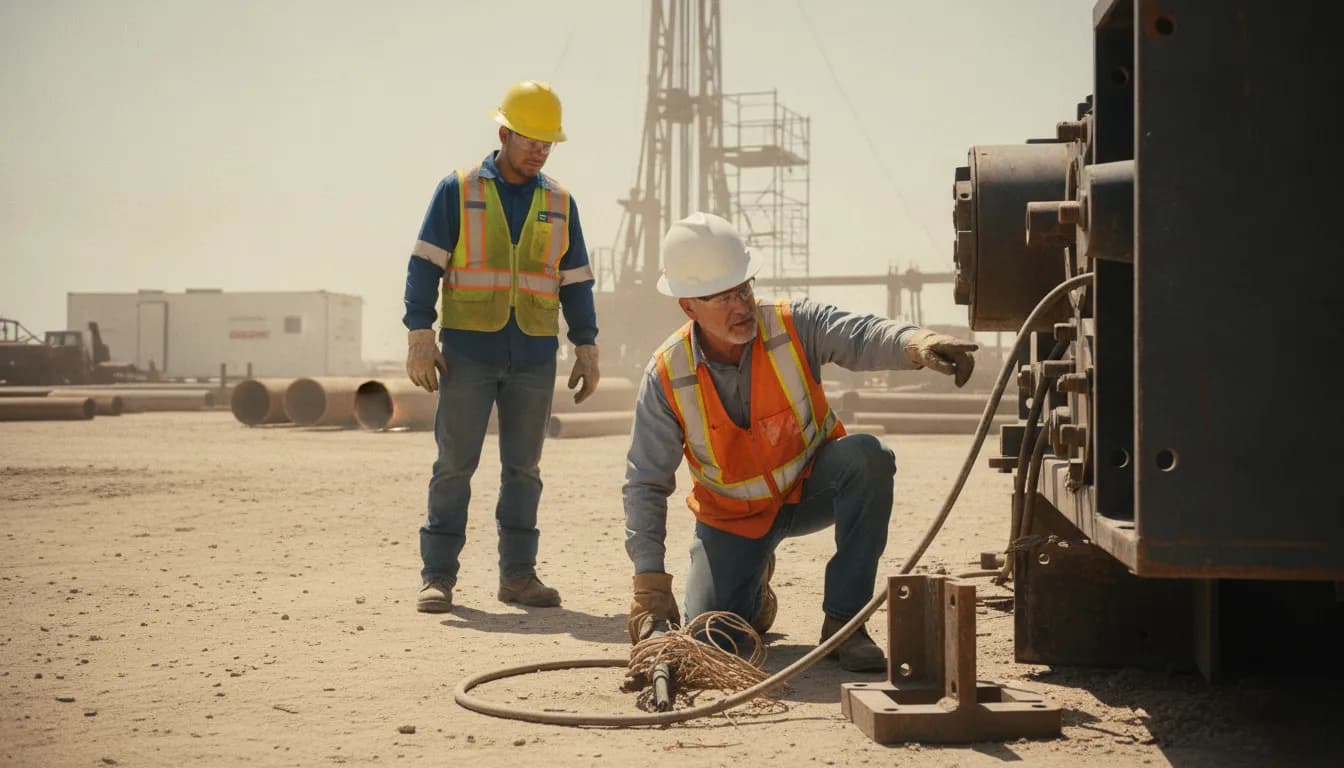
An unsafe act is something a person does, or fails to do, that raises the chance of injury. An unsafe condition is a hazard in the place, the equipment, or the materials. The practical difference in unsafe act vs unsafe condition in workplace safety is who or what you correct first: the behavior, the workplace, or both. Employers who sort the two before they coach or repair avoid the common mistake of blaming a worker for a broken guard, a blocked exit, or a missing procedure.
Schedule a workplace safety consultation.
Patriot Safety and Services has spent more than 14 years helping employers in oil and gas, construction, transportation, and other regulated work. The team has completed more than 230 projects. This guide is for safety managers and owners who need a clear way to name the hazard, write it down, and assign a fix. It does not replace a full job hazard analysis. It also does not walk through a complete incident investigation.
What Is an Unsafe Act vs an Unsafe Condition?
An unsafe act is a person's action or omission. An unsafe condition is a physical or procedural hazard that exists whether or not someone is in the middle of a bad choice. Use that split on every report so the correction matches the cause.
An unsafe act is a departure from the accepted safe way to do a job. Examples include bypassing a guard, skipping a lockout step, standing under a suspended load, or using a damaged ladder because it is closer. The person may know the rule and break it, or they may never have been shown the rule. Either way, the immediate issue is behavior.
An unsafe condition is the state of the workplace. A missing guard, an unlabeled chemical, poor lighting, a slick walkway, or a blocked emergency exit is a condition. It can sit there all shift and injure the next person who walks through, even if every worker that morning followed the rules they were given.
OSHA's general duty rule puts the workplace duty on the employer. Section 5(a)(1) of the OSH Act requires a workplace free from recognized hazards that can kill or seriously harm employees. Section 5(a)(2) requires compliance with OSHA standards. Section 5(b) says each employee shall comply with the rules that apply to that employee's own actions. The statute is on OSHA's duties page.
That split matters in a write-up. A worker who climbs a sound ladder with untied boots is an act. A ladder with a cracked rail, stored where people must climb it, is a condition. Many events include both. Name both, or the fix will be incomplete.
How Do You Tell an Act From a Condition on the Floor?
Ask what would still be dangerous if the person stopped and walked away. If the danger leaves with the person, you are looking at an act. If the danger stays in the equipment, the layout, or the materials, you are looking at a condition.
Use four checks before you label the report:
- What is the person doing, or not doing, right now?
- What about the tool, machine, chemical, or area is already wrong?
- Was there a written safe method, and was the person trained on it?
- Would the next crew meet the same hazard at the start of their shift?
If only the first answer is a problem, treat it as an act and look for why the rule was skipped. If the second or fourth answer is a problem, treat it as a condition and remove or guard the hazard. If the third answer is no, the missing method is itself a condition, even when the visible event looks like a bad choice.
Do not stop at "carelessness." OSHA's incident guidance says it is easy, and often misleading, to conclude that failure to follow a procedure alone caused an incident. Investigators should ask why the rule was not followed, whether production pressure played a role, and whether the procedure or training was out of date. That guidance is on OSHA's incident investigation page.
A short classification note is enough at the moment of discovery. Save the full fact pattern, witness statements, and corrective-action tracking for your workplace incident investigation procedure when someone is hurt or a close call needs a formal review.
Unsafe Act vs Unsafe Condition in Workplace Safety Examples
The same scene can contain an act, a condition, or both, so the examples below separate the person from the workplace. Use the table when a supervisor is unsure which box to check.
| Workplace scene | Unsafe act | Unsafe condition | First correction |
|---|---|---|---|
| Forklift aisle | Operator drives with the load raised and no horn at a blind corner. | Aisle markings are gone and stored pallets block the view. | Stop the travel. Then clear the sight line and retrain the operator. |
| Grinder or press | Worker removes a guard to finish a rush piece. | Guard is missing, broken, or will not stay closed. | Take the machine out of service until the guard is restored. |
| Chemical storage | Employee pours solvent into an unlabeled drink bottle. | Secondary containers have no labels and the SDS binder is missing. | Relabel or discard the container. Then restore the SDS set. |
| Ladder work | Worker stands on the top cap of a sound ladder. | Ladder rails are bent, or the only ladder is too short for the task. | Get down. Tag out the bad ladder and supply the right one. |
| Walking surface | Person runs through a posted wet area. | Oil leak has no cleanup, no sign, and no drip tray. | Barricade the spill and fix the leak. Then address the rushing. |
| Energy control | Technician skips a lock because the job will only take a minute. | No locks are available, or the procedure does not match the machine. | Stop the work until a current lockout method and devices are in place. |
Machine and energy examples deserve a hard stop. A missing or defeated guard is a condition even if someone removed it earlier in the shift. Patriot's machine guarding guide covers the OSHA guarding duty. The lockout/tagout guide covers energy control. This comparison only tells you which label to put on the report before those deeper rules apply.
Housekeeping items are usually conditions: blocked exits, poor lighting, damaged cords, and unsecured cylinders. Rushing, horseplay, and bypassing a known step are acts. When a condition makes the safe act impossible, fix the condition before you coach the person. Otherwise the next worker repeats the same shortcut.
How Should Employers Report Each Type?
Every report should name the act, the condition, or both, plus the location, the task, and who owns the correction. A one-line "be careful" note does not give the next shift anything to fix.
A usable report includes:
- Date, time, location, and the job or task underway.
- A plain description of what the person did and what the workplace looked like.
- A check for unsafe act, unsafe condition, or both.
- Whether anyone was injured or it was a close call.
- The temporary control used right away, such as a barricade, a tag, or a stop-work.
- The name of the person who will verify the lasting fix.
Encourage workers to report conditions they did not cause. People stay quiet when every card turns into a scolding. Separate the card that says "guard is off" from the coaching conversation about who took it off. Supervisors should close the condition in the work area the same day when the fix is simple, and log a work order when it is not.
Close calls belong in the same log. OSHA encourages employers to investigate incidents in which a worker was hurt and close calls in which someone might have been hurt if the circumstances had been slightly different. You do not need a separate theory for near misses here. Classify the act and the condition, then send formal cases into your investigation process.
Keep the log where supervisors already work: a shared form, the daily huddle sheet, or the maintenance system. Review open conditions in the weekly safety meeting. Review repeated acts by task, not by naming people in front of the crew. Repeated acts on one task usually mean the method, the tools, or the staffing is wrong.
What Correction Fits an Act, and What Fits a Condition?
Correct an act with a clear method, training, and supervision. Correct a condition by removing it, guarding it, or changing how the work is done. Coaching does not fix a broken guard, and a new guard does not fix a crew that keeps taking guards off.
For an unsafe act, confirm the safe method in writing, show the person the step they skipped, and watch one correct repetition. If several people skip the same step, retrain the crew and look at schedule pressure. Discipline is a last step after the method is clear and the tools make the safe way possible. Document what you told the worker and when you verified the new habit.
For an unsafe condition, use this order:
- Remove the hazard when you can, such as repairing the leak, replacing the ladder, or clearing the exit.
- Guard what you cannot remove, such as a barrier, a machine guard, or a lockout device.
- Change the task so people are not exposed, such as a different tool or a different sequence.
- Use warnings and personal protective equipment only as extra protection, not as the only fix.
Assign a person and a date. "Maintenance is aware" is not a correction. The supervisor who found the condition should be able to point to a closed work order or a photo of the repair.
When both are present, do the condition first so the safe act is possible, then coach the act. A technician who skipped lockout because no locks were in the crib needs locks in the crib before the coaching will stick. A driver who cut a blind corner needs the pallets moved and the horn rule repeated.
Track repeats. Three reports of the same condition in a month mean the first fix failed or was never checked. Three reports of the same act on different crews mean the training or the procedure is weak. Feed those patterns into the workplace safety program instead of treating each card as a one-off.
How Do You Prevent Both Before Someone Gets Hurt?
Prevention is a short list: look for conditions on a schedule, teach the safe act before the task, and stop work when either one shows up. You do not need a new program name to do that.
Build a condition walk for the areas that hurt people in your industry. In shops and plants, that usually means guards, cords, walkways, chemical labels, lighting, and emergency exits. In field and construction work, add ladders, excavations, housekeeping, and vehicle paths. Write the findings as conditions with owners, not as general comments.
Teach acts at the task level. A new hire should see the safe sequence for the jobs they will actually do, not only a slide deck. OSHA 10-hour training gives many crews a shared baseline. It does not replace a demonstration of the specific machine, chemical, or lift on your site.
Supervisors set the pattern. If a leader praises speed when a guard is off, the crew learns that the act is allowed. If a leader stops the job, thanks the person who reported the condition, and shows the repair, the next report comes sooner. That is the daily version of a safety culture, and it lives in what gets corrected this shift.
Use your existing hazard reviews to feed the log. A job hazard analysis should already list the conditions built into a task and the acts required to stay clear of them. When the analysis and the floor do not match, update the analysis or fix the floor. Do not keep two versions of "safe."
Patriot helps employers turn these findings into training, program updates, and audit-ready records. If your log is full of repeat conditions, or your supervisors are labeling every event as an act, a short consult can sort the categories and the owners.
Talk with Patriot about a safety program review
Frequently Asked Questions
What is the difference between an unsafe act and an unsafe condition?
An unsafe act is a person's action or omission, such as skipping a step or misusing a tool. An unsafe condition is a hazard in the workplace, such as a missing guard, a spill, or a blocked exit. Many events include both, and the report should say so.
Is an unsafe condition the employer's responsibility?
Yes. OSHA's general duty clause requires employers to provide a workplace free from recognized hazards that can cause death or serious harm, and to follow OSHA standards. Employees must follow the rules that apply to their own actions, but that does not shift a broken guard or a missing procedure onto the worker.
Can one event be both an unsafe act and an unsafe condition?
Yes. A worker who removes a guard has committed an act, and the unguarded machine is then a condition for everyone else. Fix the condition so the machine cannot run unguarded, then address why the guard was removed.
Should close calls be classified the same way as injuries?
Yes. Classify the act and the condition on close calls too. OSHA encourages employers to investigate close calls as well as incidents in which someone was hurt, because the hazard was already present.
Does this replace a job hazard analysis?
No. Classifying acts and conditions helps you label what you find. A job hazard analysis is the separate step-by-step review of a task, its hazards, and its controls. Use both, and keep their records distinct.